Rubber components
Graphene nanotubes for rubber parts: Electrical conductivity and mechanical reinforcement
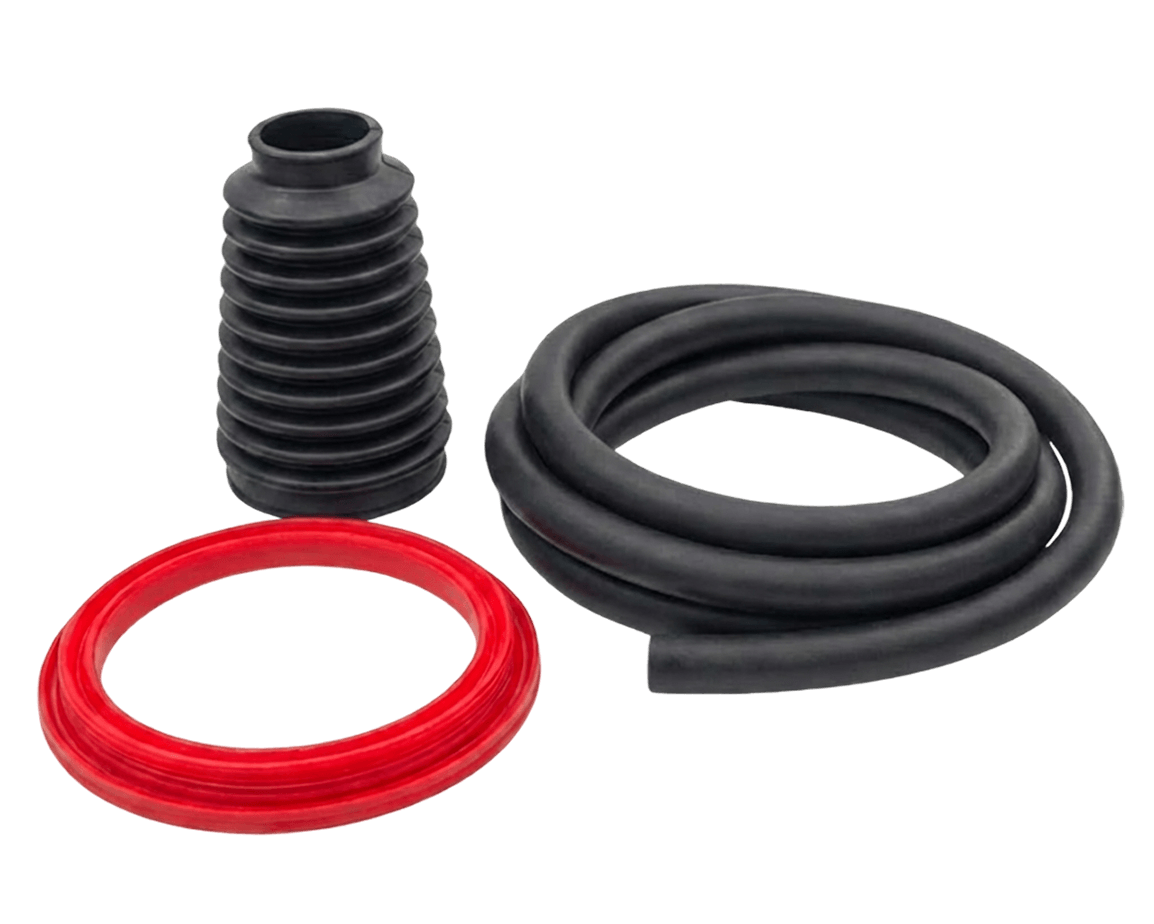
Graphene nanotubes impart electrical conductivity to FKM rubber components, enabling the safe dissipation of electrostatic charge. This ensures compliance with ATEX and IECEx requirements while protecting people, equipment, and products. Such materials are well suited for use in explosive environments, automotive and electric vehicles, industrial conveying systems, medical equipment, packaging, aerospace, robotics, and the electronics and semiconductor industries.
Rubber components enhanced with graphene nanotubes show anti-static and ESD-protective performance that remains effective even after exposure to heat or fuel aging. They also demonstrate improved mechanical strength, extending service life and reducing material waste during the demolding process. The clean, carbon-free surface of antistatic rubbers with nanotubes expands application opportunities and simplifies handling.
Contact us to discuss your project specifications or to request a TUBALL™ product sample
Main properties
Stable electrical resistivity
<10⁶ Ω/sq
Improved strength
in harsh environments
+50%
Retained elasticity
& hardness

Graphene nanotubes for rubber parts

Why choose FKM rubbers for harsh environments?
FKM rubber industrial parts are widely used in areas that require extreme heat, chemical, or weather resistance. Fluoroelastomer provides exceptional resistance to high temperatures, fuels, oils, and aggressive chemicals, making it ideal for automotive, oil & gas, and chemical processing applications. It maintains mechanical integrity and sealing performance even under prolonged thermal and chemical exposure. Conductive rubber elastomers are used in production in areas with automated systems and sensors where color and electrostatic properties are required. Such FKM delivers a significantly longer service life and greater stability in critical industrial sealing and protection systems.

Extended service life
TUBALL™ graphene nanotubes provide permanent anti-static performance at ultralow loadings and enhance durability by improving:
- mechanical modulus by 25–35%
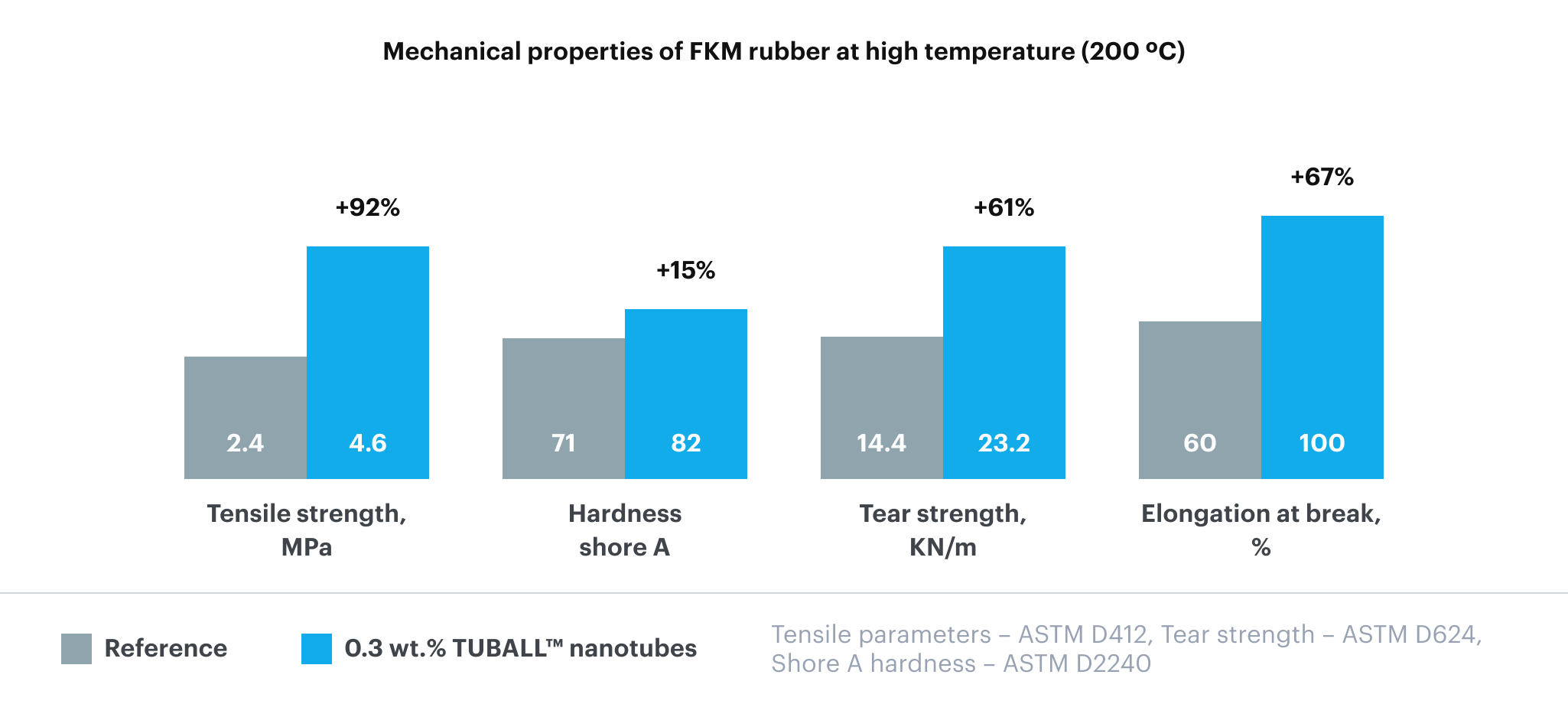
- tear strength by 25–103%
- tensile strength by 14–36%
- abrasion resistance by 10–12%, preserving elasticity and hardness.
Unlike migratory additives, they do not leach out or depend on environmental conditions, making them suitable for long service life, ATEX/IECEx, and cleanroom applications. Combined, this set of properties leads to an extended shelf life of rubber products.
- Silica-based formulation
- Carbon black-based formulation
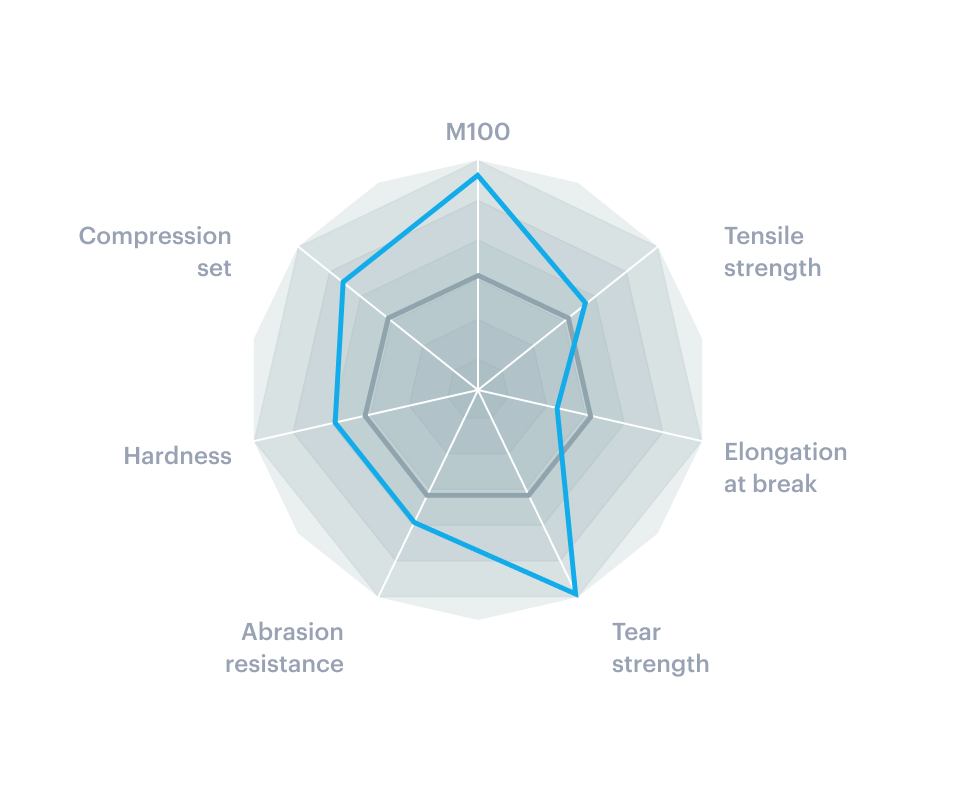
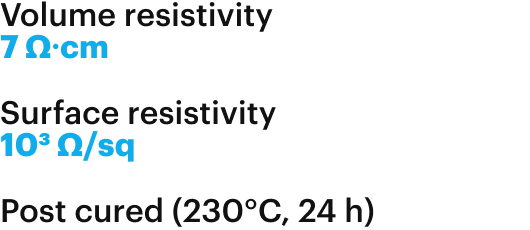
- 0.3 wt.% TUBALL™ graphene nanotubes
- Reference
Volume resistivity – ASTM D 991
Surface resistivity – ISO 14309
Tensile parameters – ASTM D412
Tear strength – ASTM D624
Abrasion resistance – ASTM D5963
Compression set – ASTM D 395

Good performance at high temperatures
Rubber parts enhanced with TUBALL™ graphene nanotubes demonstrate improved durability and mechanical stability, particularly at elevated temperatures. This enhanced performance is critical in applications where components are exposed to heat sources, aggressive fluids, combustion processes, or high-friction environments.
Contattaci per discutere le specifiche del tuo progetto o per richiedere un campione di TUBALL™ MATRIX

Additional benefits
Carbon-free
surface
Clean
production
Color
variety

Ready-to-apply solutions
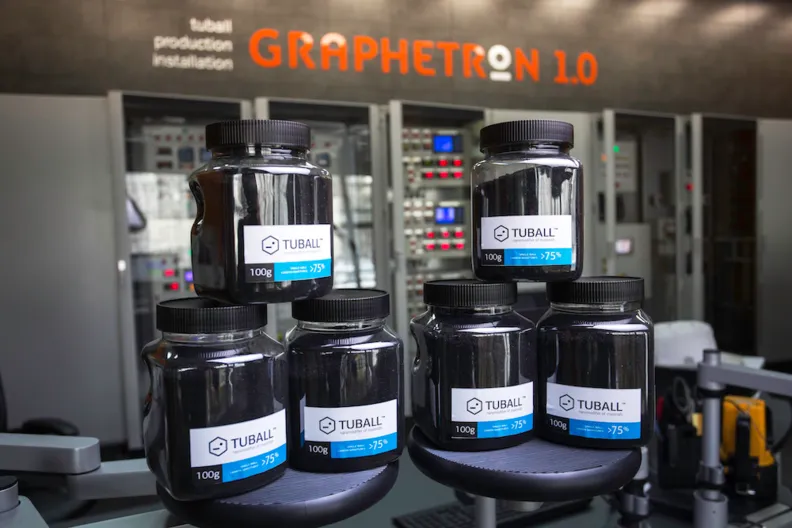
TUBALL™ MATRIX concentrates are based on polymer carriers with pre-dispersed TUBALL™ graphene nanotubes, specifically developed for elastomer applications. Designed for incorporation during the rubber compounding stage, these concentrates enable uniform nanotube distribution while preserving standard processing conditions. They are fully compatible with conventional rubber manufacturing methods, including molding and extrusion, allowing the production of complex shapes and long-profile geometries without modifying existing equipment or processes.
Contattaci per ricevere le linee guida sulla lavorazione dei prodotti e ulteriore documentazione tecnica
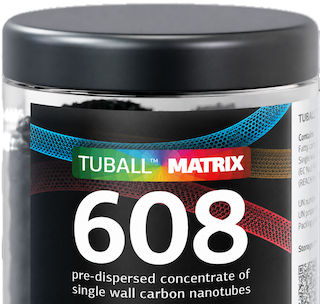
TUBALL™ MATRIX 608
A versatile masterbatch based on TUBALL™ graphene nanotubes and ultralow-viscosity fluoropolymer for improving the electrical conductivity of FKM
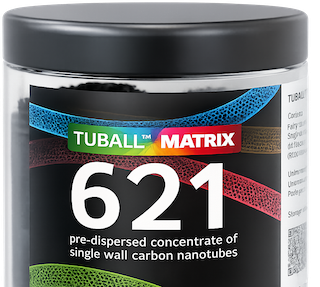
TUBALL™ MATRIX 621
An industrial modifier based on TUBALL™ graphene nanotubes and ultralow-viscosity fluoropolymer for improving the electrical conductivity of peroxide-type FKM
Related video
Car seals and hoses enhanced with nanotubes | New cars new materials
Media on graphene nanotubes in rubber components
 Pubblicato:
OCSiAl touts graphene FKM for harsh environments
https://www.rubbernews.com/news/ocsial-touts-graphene-fkm-harsh-environments/ Pubblicato:
OCSiAl simplifies single-walled carbon nanotube integration
https://www.rubbernews.com/suppliers/ocsial-rethinks-nanotube-technology-tailors-it-ev-market/
Scientific validation
Rubbers
Effects of Single-Walled Carbon Nanotubes on the Performance of Fluororubber Containing Carbon Black/Silica Hybrid Filler
Incorporating small amounts of SWCNTs into CB/silica-filled FKM creates a dense filler network that significantly enhances crosslink density, mechanical strength (up to ~90% tensile and ~105% tear improvement), wear resistance, and electrical conductivity, while optimizing properties at low loadings before agglomeration at higher concentrations limits performance.
Pubblicato:
Rubbers
Improvement in thermal durability of fluorinated rubber by the addition of single-walled carbon nanotubes as a thermally stable radical scavenger
Incorporating small amounts of CNTs into fluorinated rubber leverages their radical scavenging ability to stabilize thermal degradation processes, dramatically increasing the continuous use temperature from ~200 °C to 340 °C and significantly expanding the material’s high-temperature application range.
Pubblicato: