Single Wall Carbon Nanotubes for Cathodes
A single wall carbon nanotube, also known as a graphene nanotube is a one-atom-thick sheet rolled into a tube, boasting a remarkable length of about 5 microns. This exceptional aspect ratio, exceeding 3,000, enables nanotubes to create resilient electrical networks, connecting electrode particles together in batteries for enhanced conductivity and strength.
Robust long–distance electrical TUBALL™ networks
Robust and reliable TUBALL™ networks work like highways for electrons and make it possible to achieve uniform low electrode internal resistance and improved durability of the electrode.
TUBALL™ networks improve key parameters
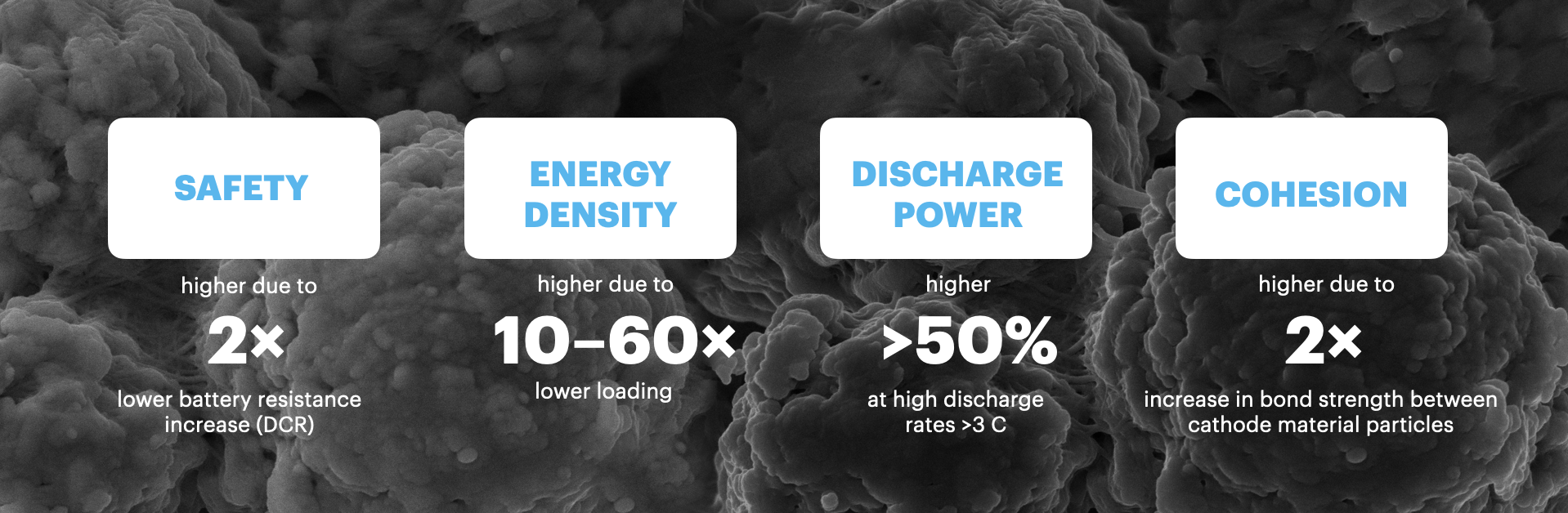
In comparison with MWCNT and carbon black cathode formulas:
Low-dosage example in NCM
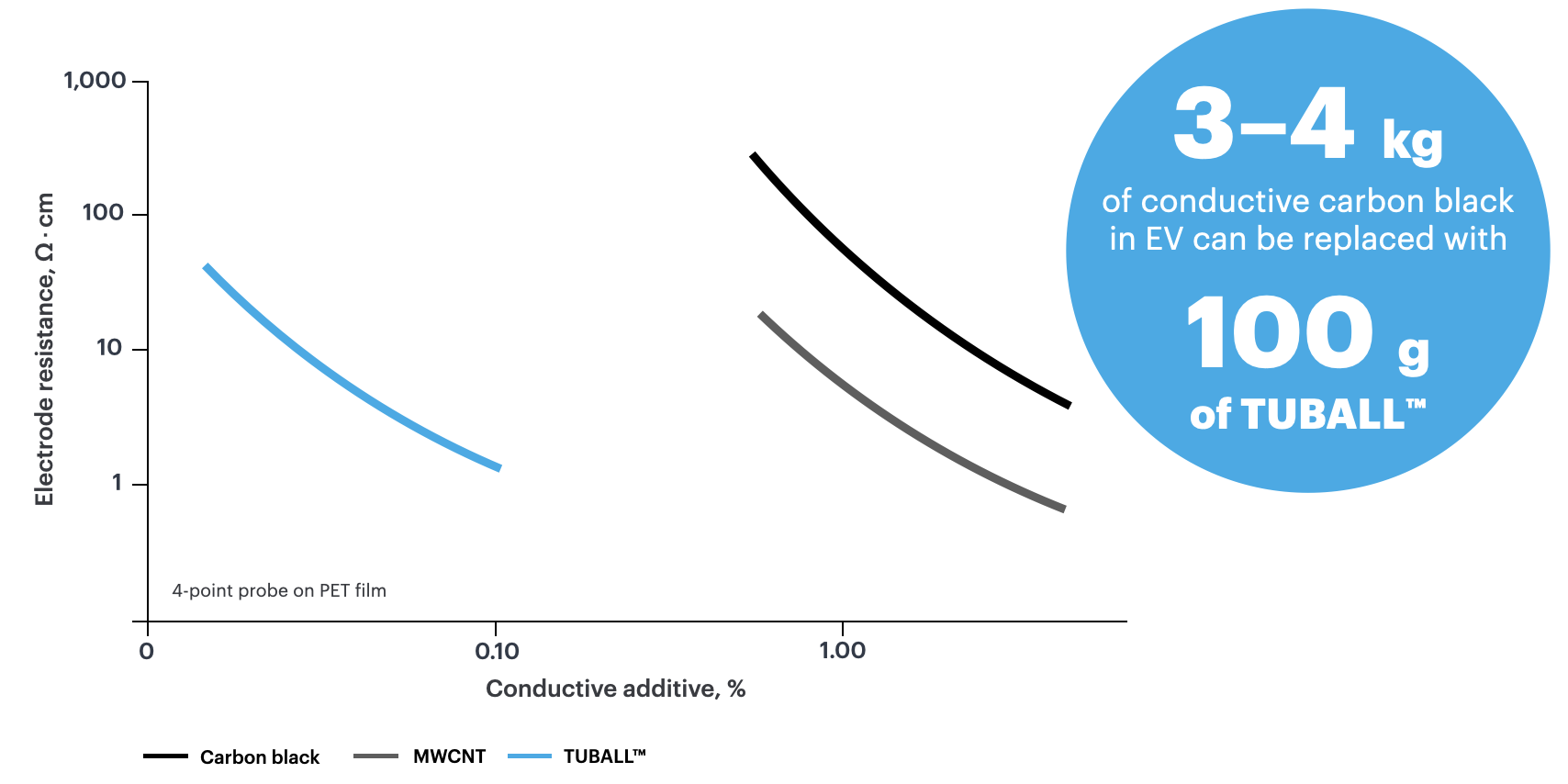
A dosage of less than 0.1% TUBALL™ single wall carbon nanotubes provides higher energy density. This concentration is 10–60 times lower than that required when using multi-wall carbon nanotubes or carbon black as a conductive material.
LOW and stable DCR in NCM 811
The fact that TUBALL™ bundles create highly conductive long-distance routes for electrons between active material particles leads to the fact that even a small amount of TUBALL™ graphene nanotubes is enough to create well-developed conducive networks in the electrode at an ultralow working dosage and thus reduce internal battery cell resistance (DCR).
The lower battery DCR results in lower temperature buildup and thus a reduced risk of a battery fire. This is a crucial safety benefit made possible by TUBALL™ single wall carbon nanotubes.
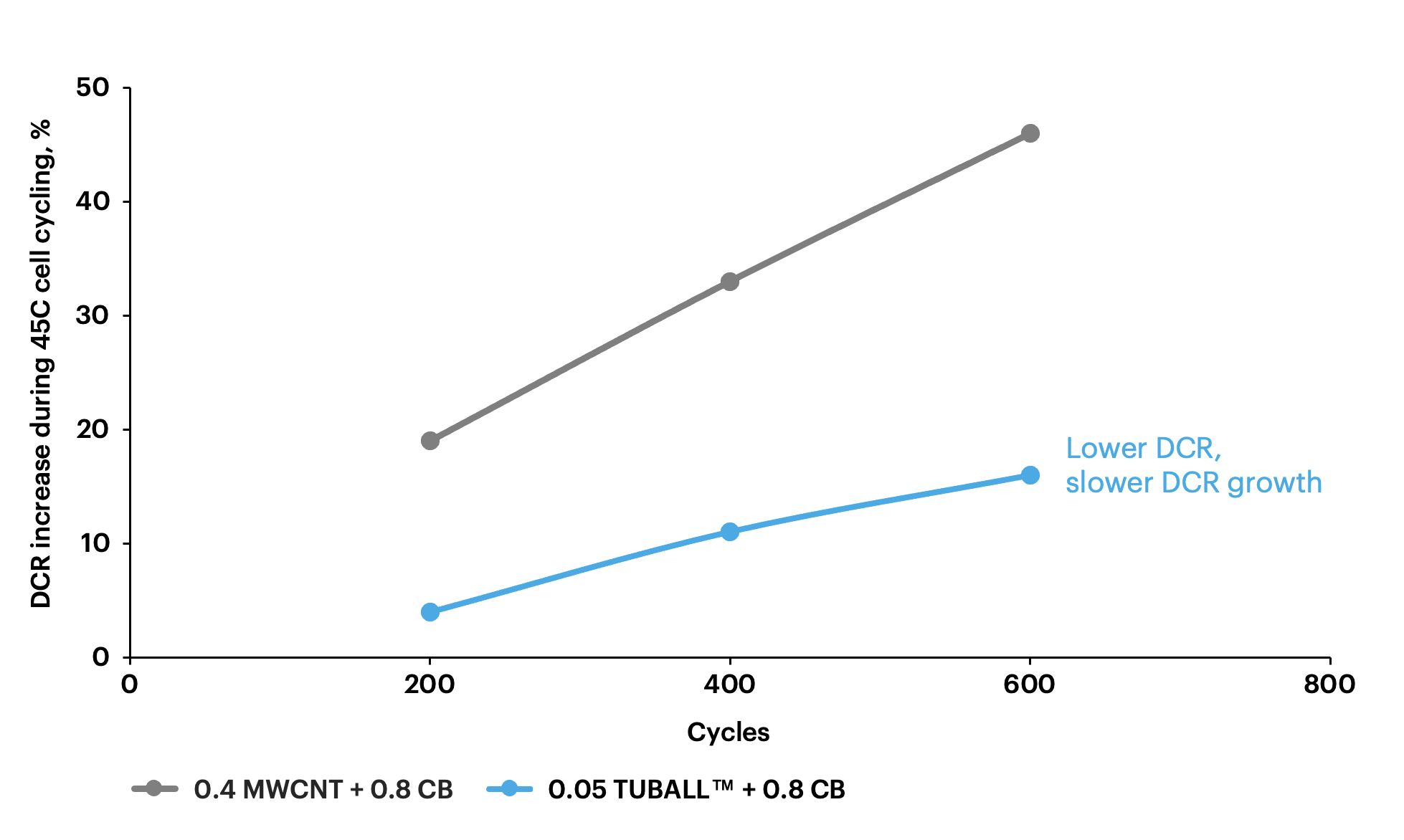
Formulation with TUBALL™ demonstrates significantly lower DCR increase.
Cells with TUBALL™ exceed the initial DCR level of standard cells for the first 600 cycles.

Related videos:
How do nanotubes work inside an electrode?
Contact us to discuss your project specifications or to request a sample