SWCNT for Dry Battery Electrode (DBE)
With a remarkable length of around 5 microns and an aspect ratio exceeding 3,000, single wall carbon nanotubes, also known as graphene nanotubes, distinguish themselves from other carbon-based materials by forming resilient electrical networks. This unique property facilitates the connection of electrode particles, making nanotubes a crucial material for enhancing conductivity and reinforcing electrodes in various battery applications.
Dry battery electrode (DBE) manufacturing process involves coating the electrodes of energy storage cells with a dry film instead of liquid chemicals. It offers unique advantages compared to conventional wet coating methods, thanks to the non-solvent process. These advantages include environmental friendliness, low cost, enhanced compatibility, high production efficiency, and improved electrode performance. |
Ensuring uniform long-distance electrical connections between active material particles is of even greater importance in emerging dry electrode battery manufacturing process. Long and flexible single wall carbon nanotubes ensure better cohesion between electrode particles and result in a uniform conductive network improving resistance of the electrode.
TUBALL™ + PTFE composites make it possible to create robust, uniform networks.
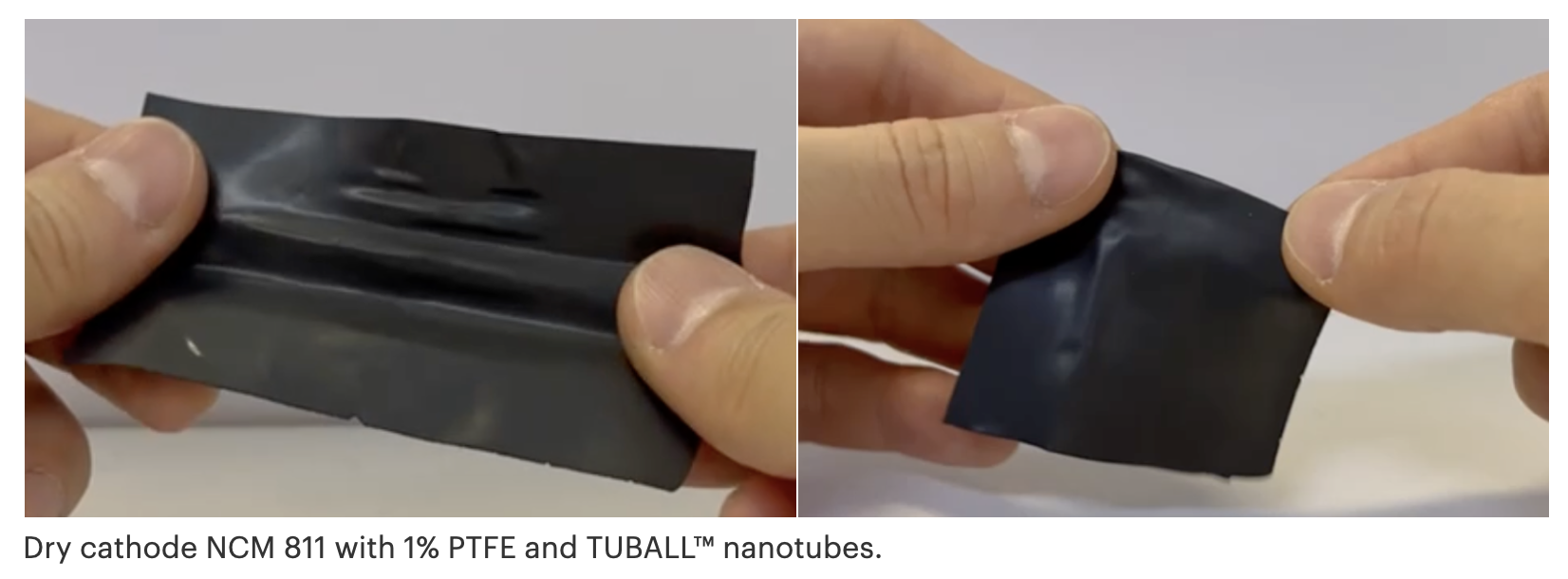
Together with partners, OCSiAl has already obtained proof-of-concept results for PTFE and TUBALL™ nanotube concentrates samples in the laboratory. The new electrode demonstrates good flexibility, durability, and electrochemical performance.
Tensile strength
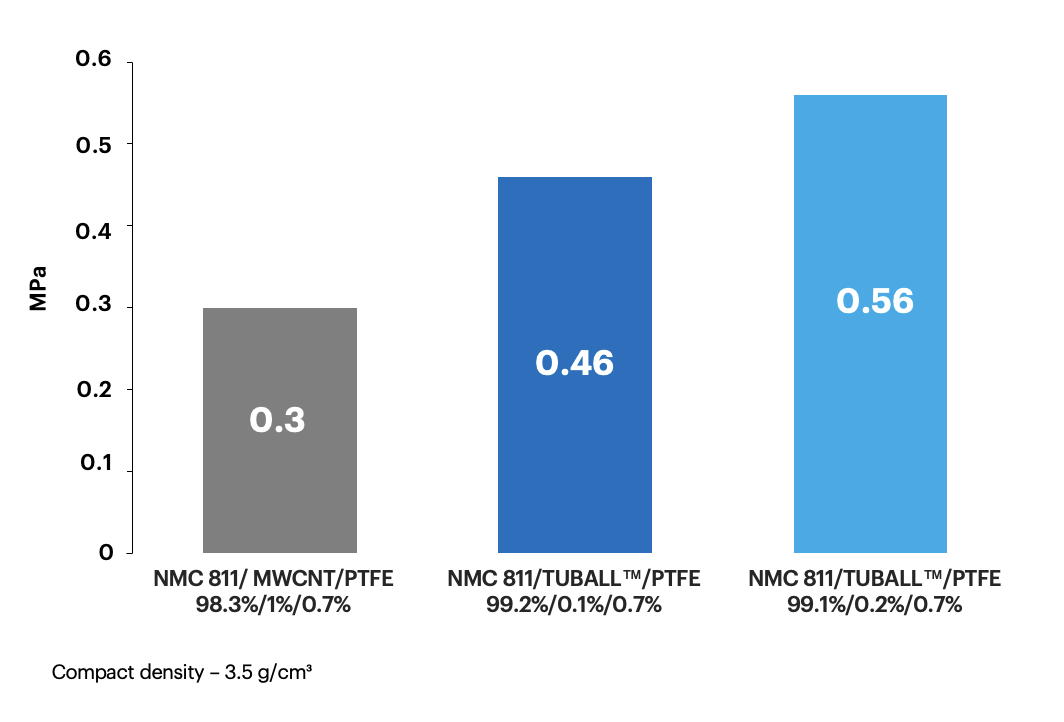
The addition of TUBALL™ nanotubes improves the mechanical characteristics of the freestanding electrode compared to other conductive additives and makes it possible to reduce the amount of binder in the formulation.
Conductivity
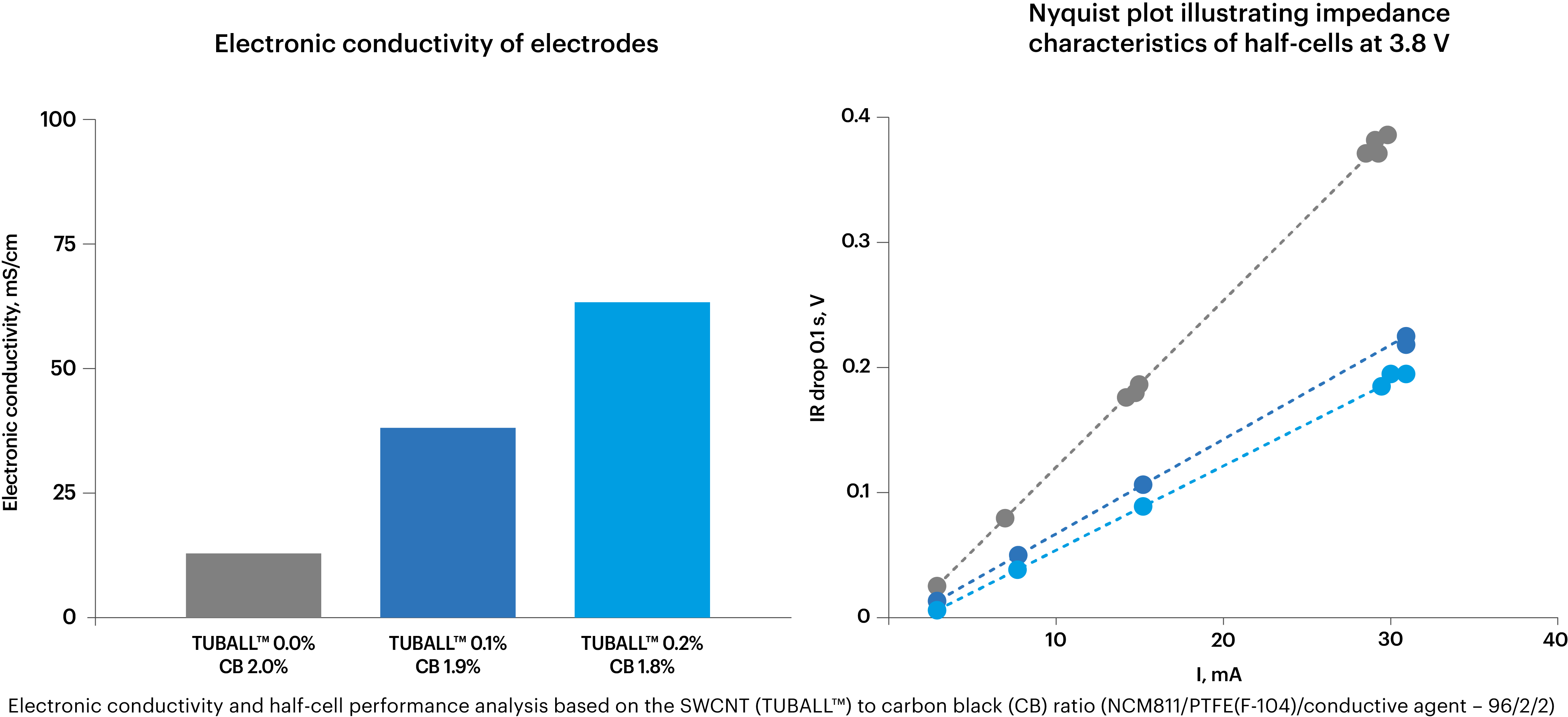
According to a recent study showing an innovative approach to incorporating carbon black and TUBALL™ nanotubes in the solvent-free dry electrode process, carbon black and single wall carbon nanotubes play a vital role as conductive agents in lithium-ion batteries, facilitating electron flow within the electrodes. Due to the low resistivity of single wall carbon nanotubes, the electrical conductivity of the dry electrode increases linearly with the nanotube content.
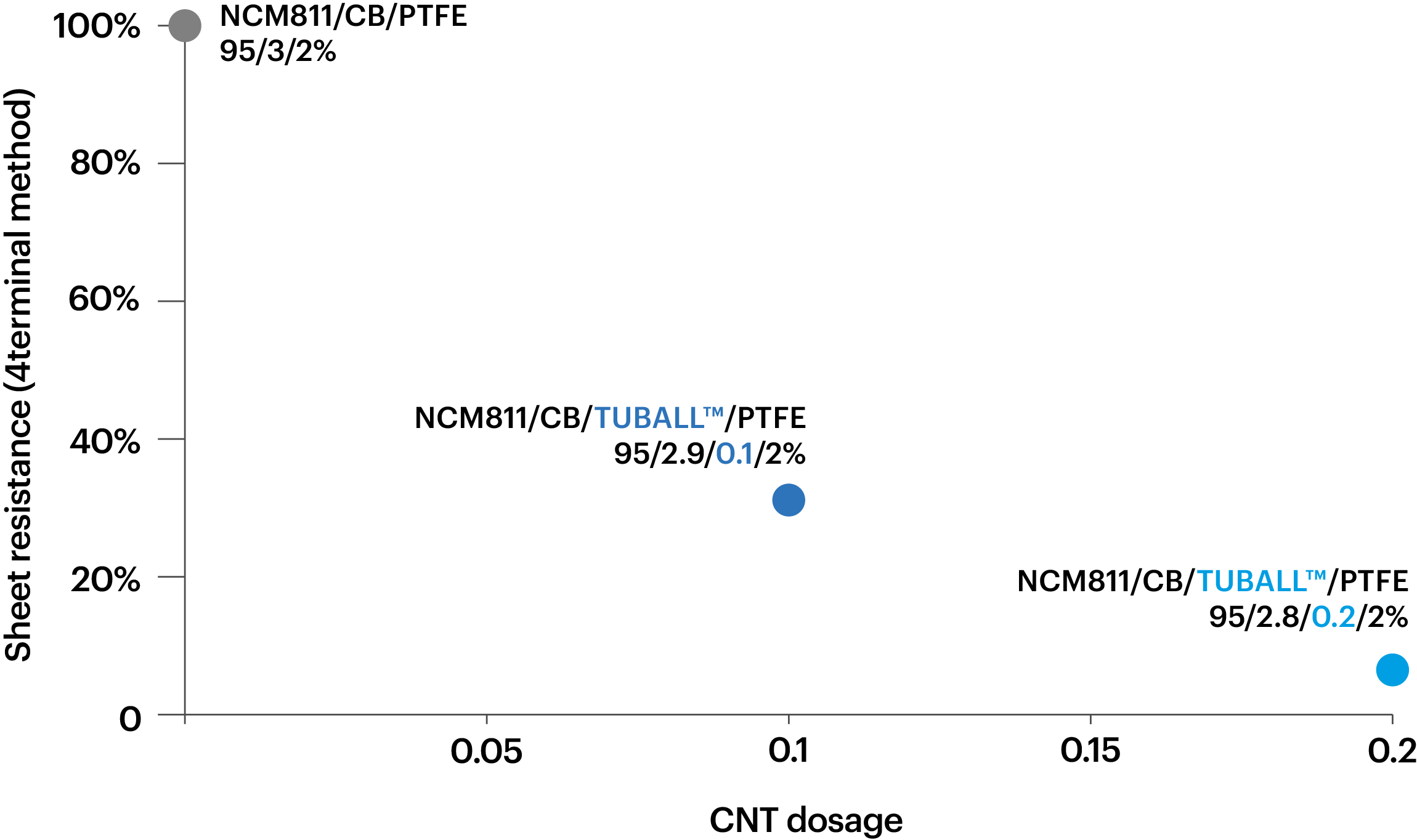
Replacing carbon black in the base formulation with TUBALL™ nanotubes leads to a significant reduction in the resistance of the freestanding cathode. A content of just one-tenth of one percent of TUBALL™ results in resistance being reduced by more than 3 times. And a content of two-tenths of a percent improves the conductive characteristics of the electrode by more than an order of magnitude.
Related videos:
How do nanotubes work inside an electrode?
Contact us to discuss your project specifications or to request a sample