3 de septiembre de 2026
Solid-state batteries are supposed to be the future of energy. The problem is that “solid meets solid” doesn’t conduct particularly well.
When two solid materials come into contact inside a cell, electrons struggle to pass through—and that’s where the bottleneck holding back the entire technology begins.
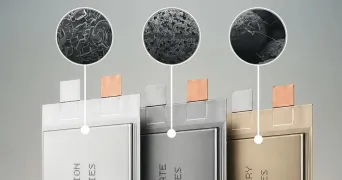
The solution doesn’t have to be a new material—it can be a network, thousands of times thinner than a strand of hair, woven through that contact point to “patch” it. TUBALL™ nanotubes do exactly that: They maintain conductivity where the material is most fragile and prevent microcracks before they even form.
A small change at the nanoscale. A major step forward for safer, longer-lasting batteries.
Learn more about how TUBALL™ is applied in next-generation battery technologies at the link: https://lnkd.in/dMWFFkMi
Leer en LinkedInWhen two solid materials come into contact inside a cell, electrons struggle to pass through—and that’s where the bottleneck holding back the entire technology begins.
The solution doesn’t have to be a new material—it can be a network, thousands of times thinner than a strand of hair, woven through that contact point to “patch” it. TUBALL™ nanotubes do exactly that: They maintain conductivity where the material is most fragile and prevent microcracks before they even form.
A small change at the nanoscale. A major step forward for safer, longer-lasting batteries.
Learn more about how TUBALL™ is applied in next-generation battery technologies at the link: https://lnkd.in/dMWFFkMi