LFP cathodes
Performance up—cost down
TUBALL™ networks improve cohesion between electrode particles, increasing durability and flexibility of electrodes and allowing battery makers to design L(M)FP cells with record-high active material loadings.
Contact us to discuss your project specifications or to request a TUBALL™ product sample
Main properties
Higher amount of active material

Record
thickness
Lower cost
per kWh
Improve mechanical properties of cathodes


Record thickness
A robust TUBALL™ network makes it possible to create electrodes with record-high thickness by strengthening the bonds between active material particles. Continuous electronic pathways through the entire electrode enable efficient charge transport even in very thick LFP cathodes, supporting high areal loading without sacrificing conductivity.

High amount of active material
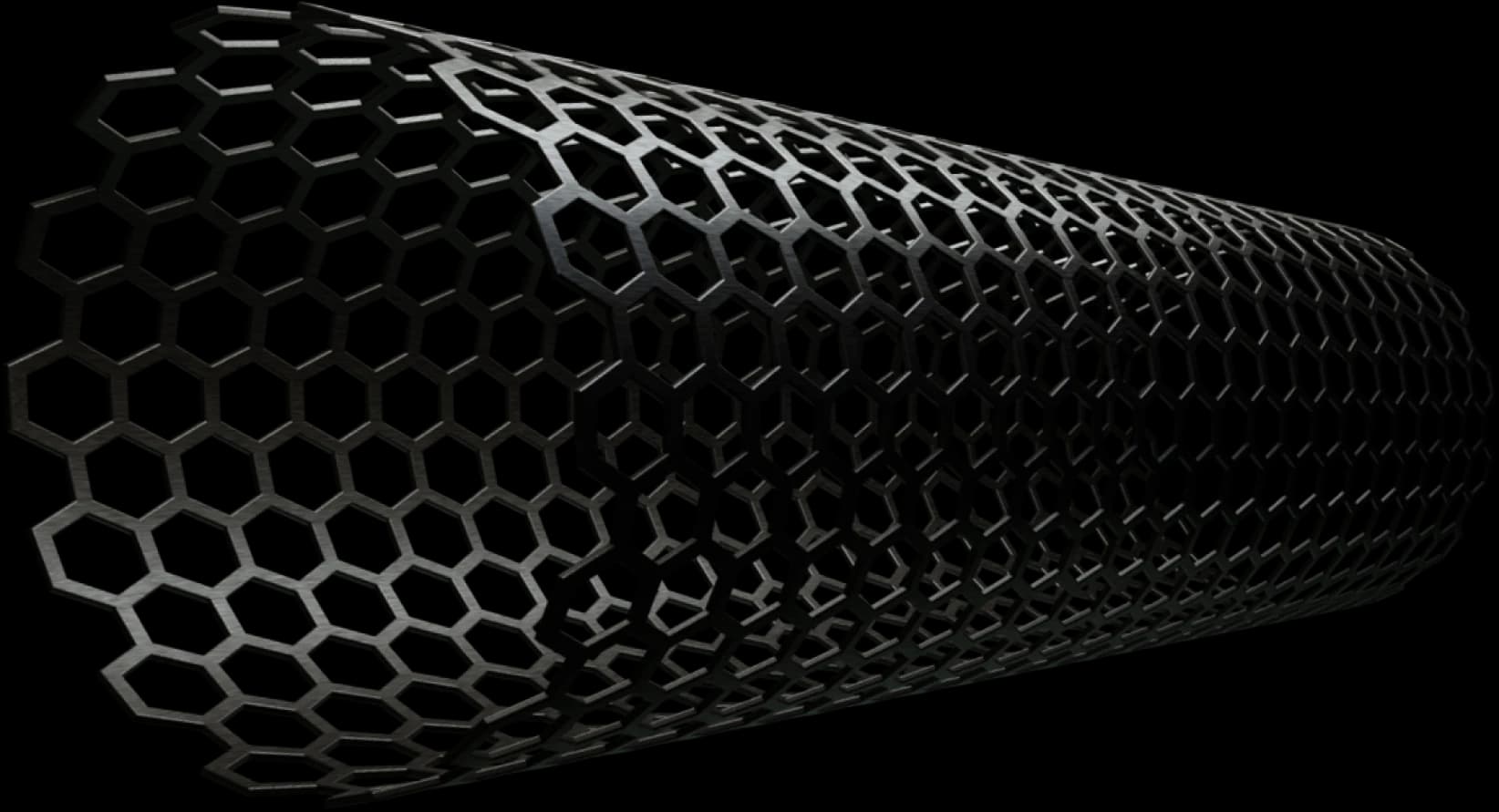
TUBALL™ SWCNTs enable a better active/inactive material ratio in LFP cathodes by providing exceptional electrical conductivity at ultralow loading levels. As a dosage of only 0.05% TUBALL™ is sufficient to create a stable, long-range conductive network, the amount of inactive conductive additives can be significantly reduced compared with requiring high-dosage carbon black or MWCNTs. This frees up more volume for active LFP material, resulting in increased energy density without compromising the cycling stability, rate capability, or safety of the cell.

Mechanical properties
The unique morphology of TUBALL™ SWCNTs enables not only ultrahigh cathode loadings but also significant improvements in the mechanical properties of electrodes. Thanks to their high aspect ratio and ability to connect electrode particles over long distances, SWCNTs form a robust conductive and mechanical network throughout the electrode structure. This network helps reduce rebound after calendering, improves electrode flexibility, and enhances electrode integrity during processing. As a result, battery manufacture becomes more stable and efficient, supporting improved electrode handling and cell assembly performance.
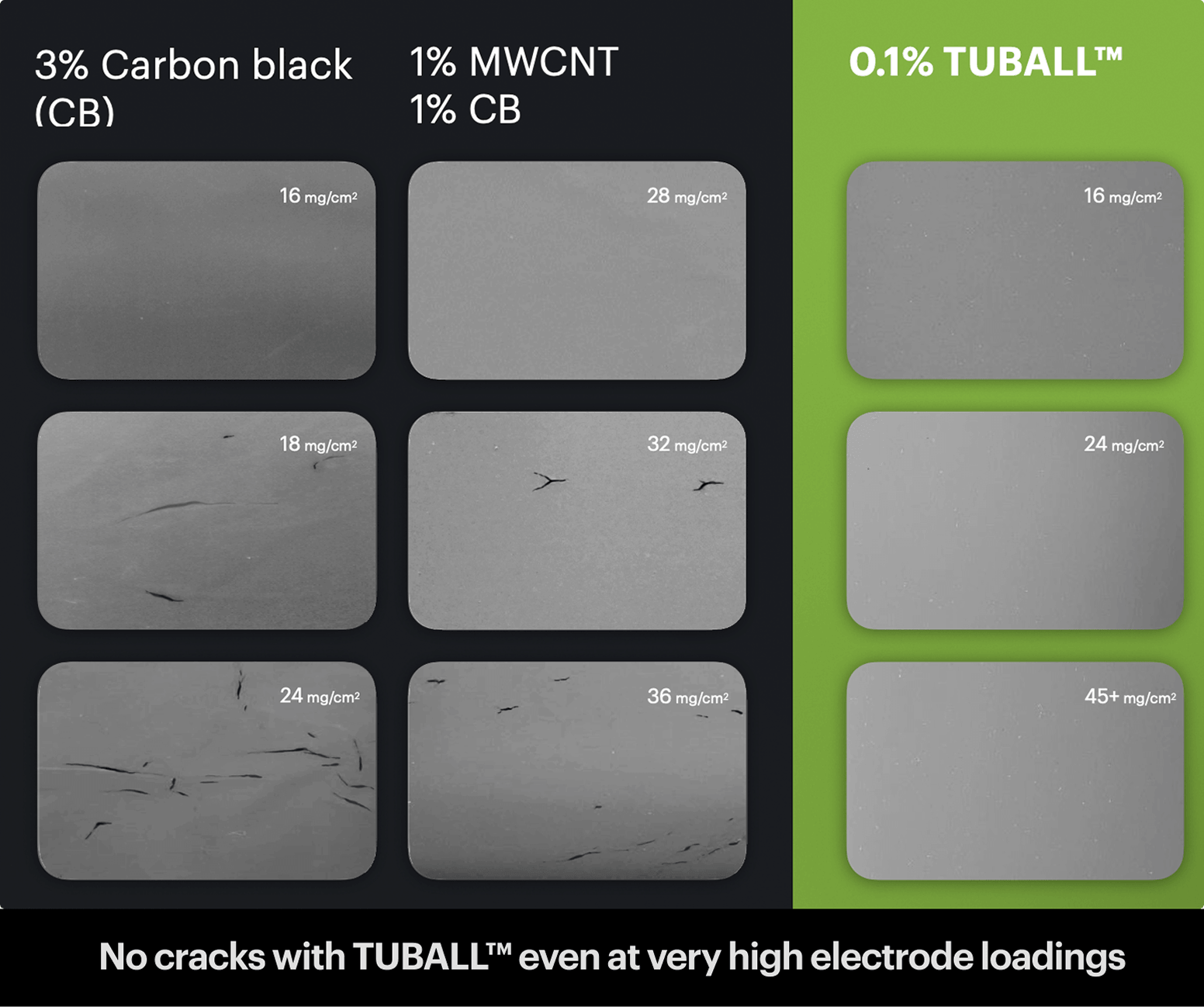

TUBALL™ thick electrode case study
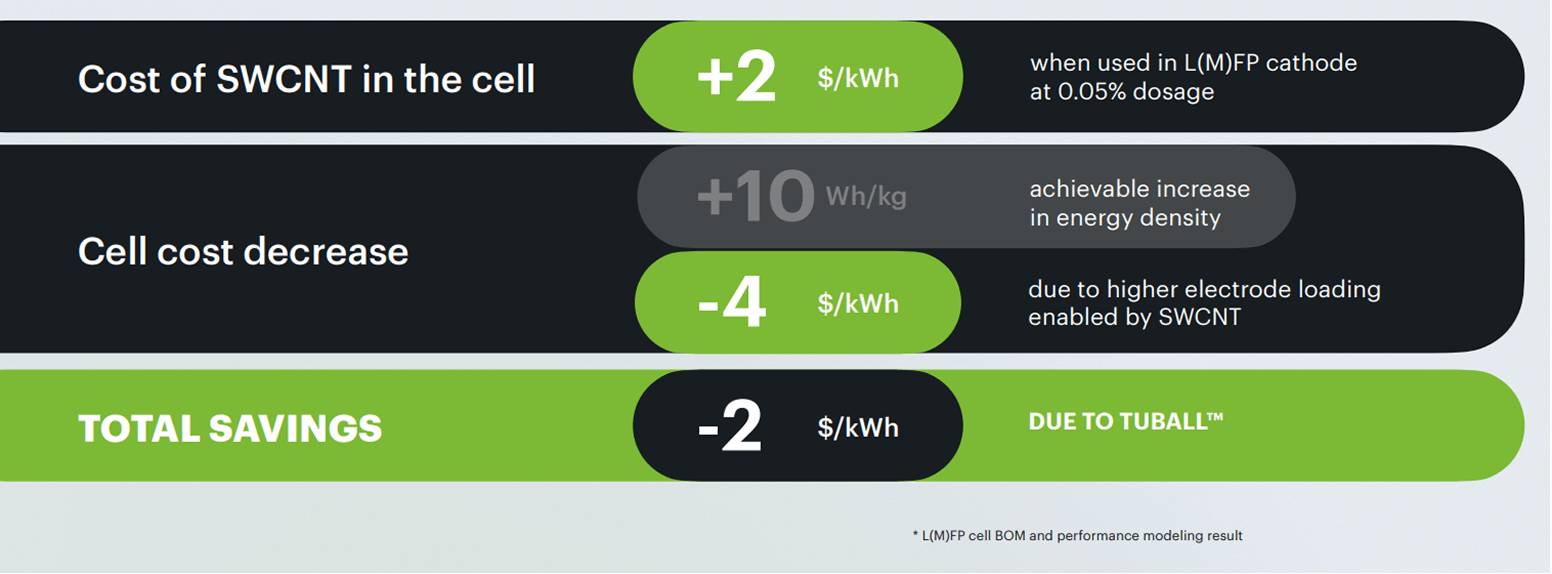
TUBALL™ SWCNTs contribute to a lower cost per kWh in LFP batteries by enabling a far more efficient use of conductive additives.
Their ultrahigh aspect ratio and ability to form a continuous percolation network at extremely low loadings—typically around 0.05%—mean that manufacturers can eliminate most carbon materials without sacrificing electrode performance. This simplifies the formulation, reduces overall material consumption, and improves manufacturing consistency.
Additionally, the enhanced mechanical robustness and slurry/process stability provided by nanotubes help reduce defect rates and production losses. Together, these factors decrease both material and operational costs, resulting in a measurably lower cost per kWh at scale.
プロジェクトの仕様についてのご相談、または TUBALL™ MATRIX サンプルのご請求は、お問い合わせください


Additional benefits
Compliant with industrial regulations

Compatible with standard processing

Ready-to-use solution
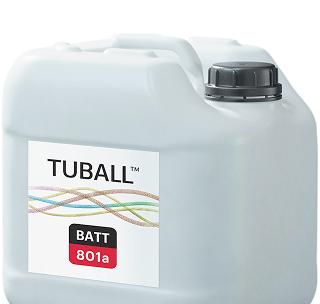
TUBALL™ BATT for cathodes is a ready-to-use solution designed for integration into existing battery cathode production processes. It contains a TUBALL™ nanotube dispersion developed for high-energy cathodes. TUBALL™ BATT is now available in an optimized, more cost-efficient dispersion form.
製品の加工ガイドラインおよびその他の技術資料については、お問い合わせください

TUBALL™ カソード向けBATT
TUBALL™ BATT NMPは、高エネルギー正極用に開発されたウルトラファインTUBALL™単層カーボンナノチューブの予備分散済みNMP溶液です。TUBALL™の優れた導電性でバッテリーはより安全になり、エネルギー密度も向上します。TUBALL™ BATTは予備分散済みなのでコスト効率がさらに改良されています。

Related video
Prof. Jonathan Coleman on TUBALL nanotubes for revolutionizing Li-ion batteries
Media on graphene nanotubes in LFP cathodes
 掲載日:
掲載日:Chinese companies to increase production of OCSiAl’s graphene nanotube dispersion
https://chargedevs.com/newswire/chinese-companies-to-increase-production-of-ocsials-graphene-nanotube-dispersion/ 掲載日:
掲載日:OSCiAl, Genius graphene nanotubes advance EV battery pack properties
https://www.compositesworld.com/news/oscial-genius-graphene-nanotubes-advance-ev-battery-pack-properties
Scientific validation

Cathodes
Comparison of Electronic Resistance Measurement Methods and Influencing Parameters for LMFP and High-Nickel NCM Cathodes
SWCNTs (TUBALL) enable the conductive network in high-loading LMFP and Ni-rich NCM cathodes, allowing the study to isolate and quantify contact and compound electronic resistances. The results show that electronic resistance is dominated by contact resistance rather than bulk electrode resistance, highlighting the critical role of SWCNT-based conductive pathways in maintaining electrode conductivity and fast-charge capability
掲載日:

Cathodes
Double-walled carbon nanotubes as effective conducting agents for lithium iron phosphate cathodes
SWCNTs and DWCNTs form a tightly wrapped conductive network around LFP particles, improving electrode conductivity, mechanical integrity, and rate capability compared with carbon black. The study shows that nanotube morphology is critical, with high-aspect-ratio CNTs enabling more efficient electron transport and stronger electrode cohesion
掲載日:

Batteries
Preparation of Tough, Binder-Free, and Self-Supporting LiFePO4 Cathode by Using Mono-Dispersed Ultra-Long Single-Walled Carbon Nanotubes for High-Rate Performance Li-Ion Battery
Mono-dispersed ultra-long SWCNTs create a continuous conductive and mechanical network that enables binder-free and self-supporting LFP cathodes with high-rate performance at extremely low additive loadings. The SWCNT framework delivers up to 130.2 mAh g⁻¹ at 5C and 90.7 mAh g⁻¹ at 20C, while providing exceptional mechanical strength, low charge-transfer resistance, and stable cycling without conventional binders or current collectors.
掲載日:
Batteries
Optimisation of Industrially Relevant Electrode Formulations for LFP Cathodes in Lithium Ion Cells
SWCNTs are identified as the most effective conductive additive for high-loading LFP electrodes, providing superior long-range electronic pathways and significantly improving high-rate performance compared with graphite alone. The study shows that increasing SWCNT content reduces electrode resistance and enables 5C:0.2C capacity ratios above 50% while maintaining industrially relevant active material loadings above 94 wt%.
掲載日:
Batteries
Scale-Up of Lithium Iron Phosphate Cathodes with High Active Materials Contents for Lithium Ion Cells
SWCNTs enabled the successful scale-up of ultra-high active material LFP cathodes (97 wt%) from laboratory coin cells to multi-layer pouch cells by maintaining a robust conductive network at minimal carbon loading. The study demonstrates that SWCNT-based electrodes preserved low resistance, strong rate capability, and excellent cycling performance during a 30× scale-up in mixing and a 300× increase in cell capacity, outperforming model predictions
掲載日:

Batteries
Ultrafast charge/discharge Li4Ti5O12||LiFePO4 full battery via regulating the microstructure of conducting network
CNTs play a central role in constructing a three-dimensional conductive network with MXene, significantly enhancing electron transport and enabling ultra-fast charge/discharge performance in both LTO and LFP electrodes. The CNT/MXene framework delivers high-rate capacities of 146.2 mAh g⁻¹ for LTO and 104.6 mAh g⁻¹ for LFP at 20C, while the full LTO||LFP cell achieves 68.3 Wh kg⁻¹ and 1547.5 W kg⁻¹ at 10C.
掲載日: