High-Ni and
single-crystal NCM
cathodes
TUBALL™ improves performance of advanced cathode chemistries
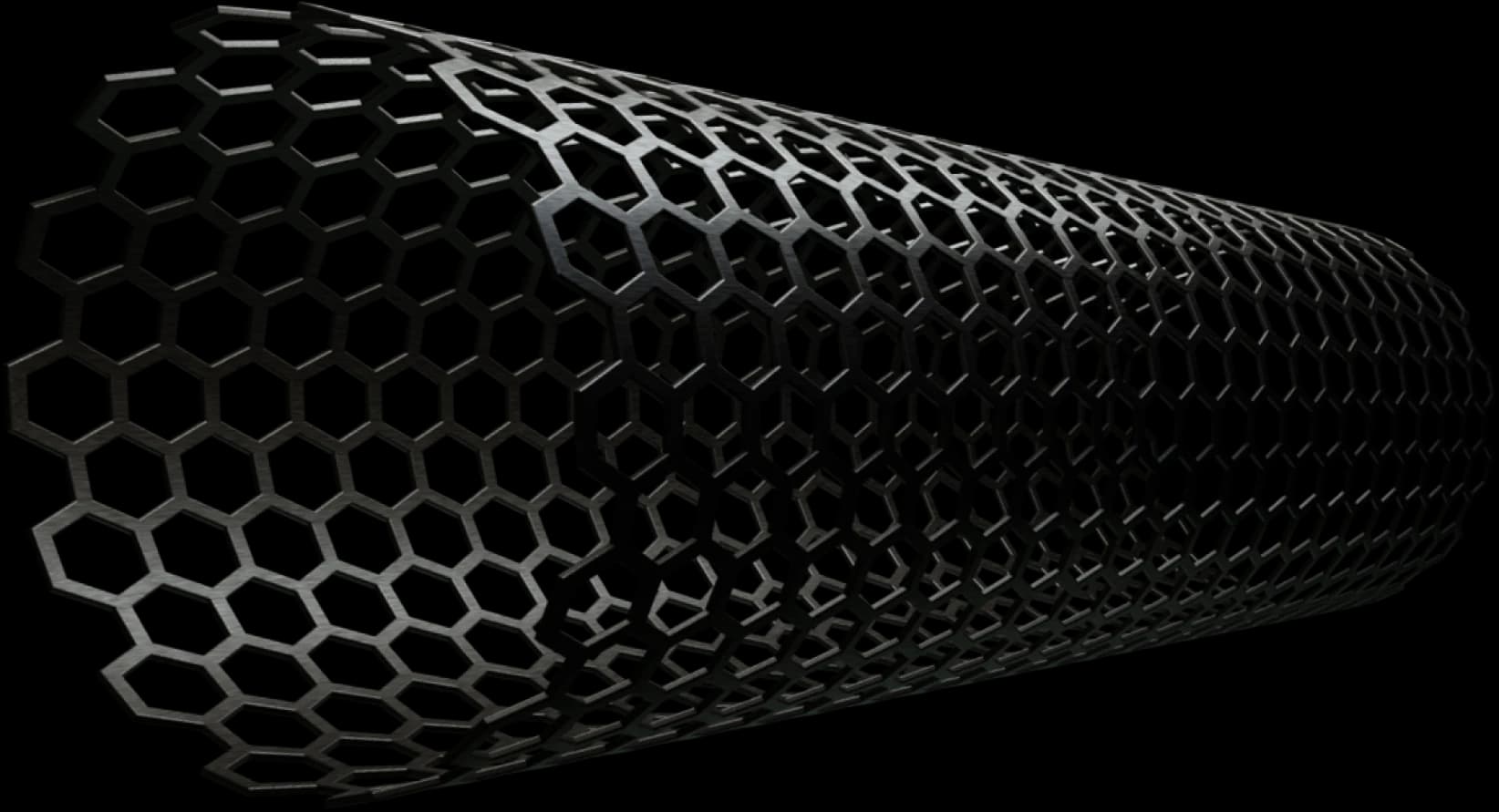
Robust TUBALL™ single wall carbon nanotube networks work like high-speed highways for electrons and make it possible to achieve uniform low internal resistance and improved durability of electrodes.

Contact us to discuss your project specifications or to request a TUBALL™ product sample
Main properties
Ultralow dosage
of TUBALL™ required
Better mechanical properties of cathodes

Significant
improvement of
conductivity of
cathodes
Reduced risk
of battery fires

Improved conductivity and reduced risk of battery fires
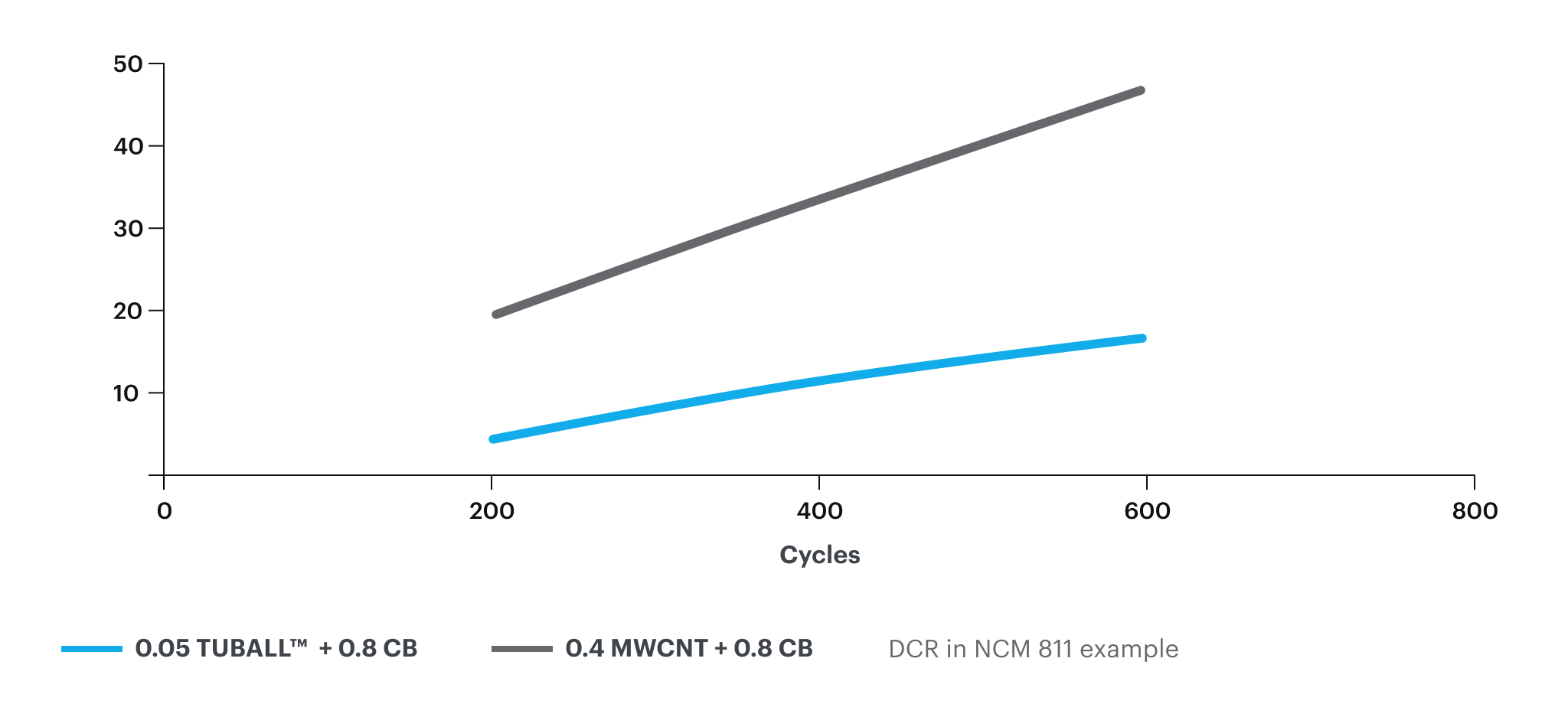
Replacement of multi wall carbon nanotubes (MWCNT) with TUBALL™ single wall carbon nanotubes in NCM 811 cells results in lowered DCR increase and improved safety. While carbon black provides surface-level connections between active material particles in standard recipes, TUBALL™ nanotubes form long, fine, conductive bundles that bridge particles throughout the electrode volume. This creates a more efficient conductive network than a combination of MWCNTs with carbon black, which is usually limited to surface connections only.

Mechanical properties
The unique morphology of TUBALL™ SWCNTs enables not only low resistance but also significant improvements in the mechanical properties of electrodes. Thanks to their high aspect ratio and ability to connect electrode particles over long distances, SWCNTs form a robust conductive and mechanical network throughout the electrode structure. This network helps reduce rebound after calendering, improves electrode flexibility, and enhances electrode integrity during processing. As a result, battery manufacture becomes more stable and efficient, supporting improved electrode handling and cell assembly performance.
Reduction in spring back after calendering
Higher flexibility
プロジェクトの仕様についてのご相談、または TUBALL™ MATRIX サンプルのご請求は、お問い合わせください

Ready-to-use solution
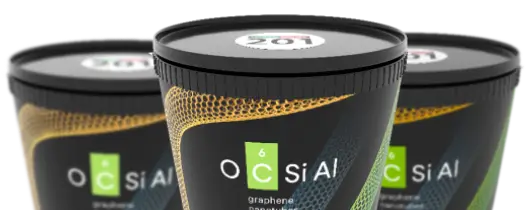
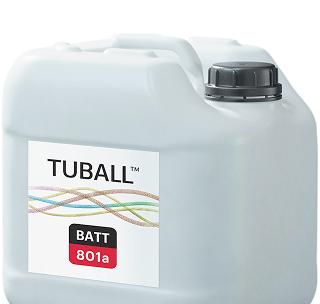
TUBALL™ BATT for cathodes is a ready-to-use solution designed for integration into existing battery cathode production processes. It contains a TUBALL™ nanotube dispersion developed for improved battery safety and higher energy density of cathodes. TUBALL™ BATT is now available in an optimized, more cost-efficient dispersion form.
To buy single wall carbon nanotube products, please contact us. Price depends on the required volumes.
Contact us for product processing guidelines and additional technical documentation

TUBALL™ カソード向けBATT
TUBALL™ BATT NMPは、高エネルギー正極用に開発されたウルトラファインTUBALL™単層カーボンナノチューブの予備分散済みNMP溶液です。TUBALL™の優れた導電性でバッテリーはより安全になり、エネルギー密度も向上します。TUBALL™ BATTは予備分散済みなのでコスト効率がさらに改良されています。

Related video
Media on graphene nanotubes in single-crystal NCM and High-nickel cathodes
掲載日:
Graphene nanotube collaboration offers new horizon for electric vehicle batteries
https://www.electrichybridvehicletechnology.com/news/battery-technology/graphene-nanotube-collaboration-offers-new-horizon-for-electric-vehicle-batteries.html
掲載日:
Chinese companies to increase production of OCSiAl’s graphene nanotube dispersion
https://chargedevs.com/newswire/chinese-companies-to-increase-production-of-ocsials-graphene-nanotube-dispersion/Scientific validation
Cathodes
Comparison of Electronic Resistance Measurement Methods and Influencing Parameters for LMFP and High-Nickel NCM Cathodes
SWCNTs (TUBALL) enable the conductive network in high-loading LMFP and Ni-rich NCM cathodes, allowing the study to isolate and quantify contact and compound electronic resistances. The results show that electronic resistance is dominated by contact resistance rather than bulk electrode resistance, highlighting the critical role of SWCNT-based conductive pathways in maintaining electrode conductivity and fast-charge capability
Published:

Cathodes
Highly efficient oxidation of single-walled carbon nanotubes in liquid crystalline phase and dispersion for applications in Li-ion batteries
Debundled and mildly oxidized SWCNTs enable dispersant-free NMP slurries, forming a more homogeneous conductive additive/binder network in Ni-rich NCM811 cathodes. The highly conductive SWCNT framework (2384 S cm⁻¹ film conductivity) improves electrode integrity and delivers ~23.3% higher capacity retention after 100 cycles compared with conventional carbon black electrodes.
Published:

Cathodes
Eco-Friendly Fabrication of NCM811 Cathodes with Alcohol-Based Dispersion of Single-Walled Carbon Nanotubes for Lithium-Ion Battery Application
SWCNTs dispersed in an alcohol-based, dispersant-free system act as both conductive additives and conductive binders, enabling a more sustainable fabrication route for Ni-rich NCM811 cathodes. The SWCNT network enhances electrode flexibility, conductivity, and rate capability, while maintaining ~78% capacity retention after 150 cycles and outperforming conventional carbon black formulations.
Published: