Silicon
Anodes
TUBALL™ is the industry standard in silicon-based anodes
“Single-walled carbon nanotubes are like magic in electrodes where particles have huge volume change—they turn garbage into gold.”
— Prof. Jeff Dahn, NSERC/Tesla Canada Inc. Industrial Research Chair, one of the world’s leading electrochemists. – March, 2025
We founded the single wall nanotube industry and invented the only scalable synthesis technology delivering a consistently high-quality product validated by customers worldwide. Backed by a global team with unmatched expertise, OCSiAl sets the standard.

Contact us to discuss your project specifications or to request a TUBALL™ product sample
Main properties
Makes it possible
to increase silicon content
Significantly
prolongs cycle life
Minimized
swelling

How do SWCNTs work in silicon anodes?
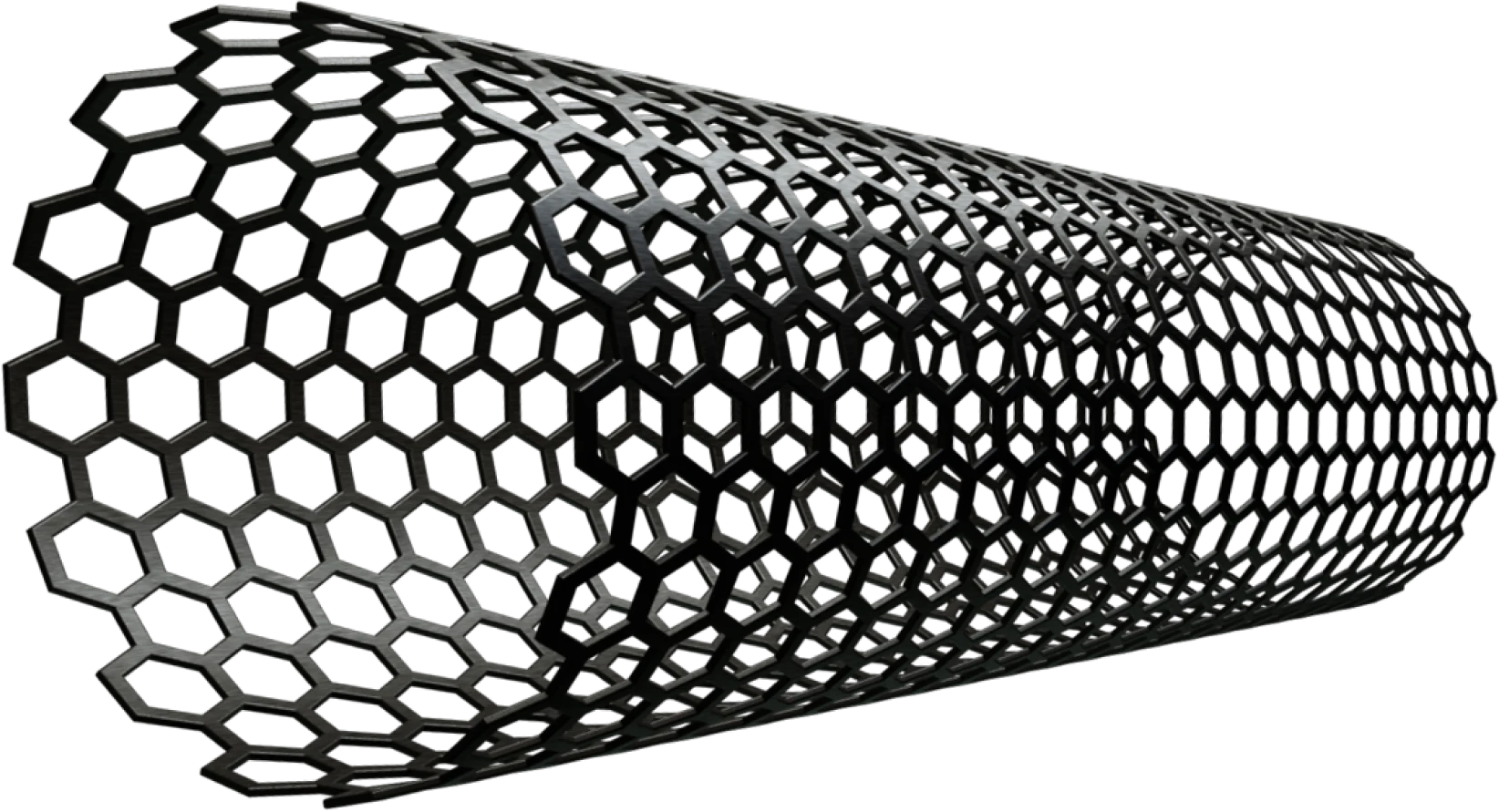
TUBALL™ single wall carbon nanotubes set a new industry benchmark in silicon anode performance. By forming a robust, long-lasting conductive network, TUBALL™ bridges silicon particles and prevents the structural degradation caused by silicon’s natural volume expansion and cracking during cycling.

Longer cycling
of silicon-rich anodes

The more silicon in the anode, the more essential becomes the use of single wall carbon nanotubes in the design.

In silicon-rich anodes (up to 90% SiOx/SiC), volume expansion becomes a critical challenge. Without a robust conductive network, silicon particles fracture and rapidly lose capacity.
プロジェクトの仕様についてのご相談、または TUBALL™ MATRIX サンプルのご請求は、お問い合わせください

Minimized swelling
When using traditional additives like carbon black or MWCNTs, silicon anodes swell by up to 160%, causing the conductive network to break down and leading to rapid performance loss.
With TUBALL™ single wall carbon nanotubes, swelling is reduced to just ~20%. The conductive network remains intact.

Ready to use
solution
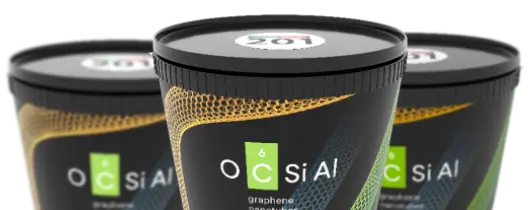
TUBALL™ BATT for anodes is a plug-and-play solution designed for seamless integration into existing lithium-ion battery production lines. It comes as a stable, water-based concentrate compatible with standard slurry mixing, coating, and drying processes — no special equipment or process changes needed. Battery manufacturers can easily upgrade to high-silicon anodes and achieve energy density targets without disrupting current workflows. This makes it a practical, low-risk path to next- generation battery performance.
Material system: LIB Anodes (SiC, Si/O, graphite)
Concentrate carrier: Water, CMC, other
製品の加工ガイドラインおよびその他の技術資料については、お問い合わせください

TUBALL™ アノード向けBATT
TUBALL™ BATTは、高エネルギーSiアノード向けの水中に分散された超微細なTUBALL™ナノチューブ分散液です。シリコン負極内に強固なネットワークを創り、劣化問題を解消します。これまでは不可能であった大量のシリコンをバッテリーセルに使用できるようになり、必要に応じたエネルギー密度と高速充電を達成します。


Media on graphene nanotubes in Silicon anodes
 掲載日:
Graphene nanotube collaboration offers new horizon for electric vehicle batteries
https://www.electrichybridvehicletechnology.com/news/battery-technology/graphene-nanotube-collaboration-offers-new-horizon-for-electric-vehicle-batteries.html
Scientific validation

Li-ion batteries
Investigating operating protocols to extend the lifespan of silicon anodes in Li-ion batteries
Silicon anodes containing a small amount of SWCNTs (0.5 wt%) show much better stability when operated at a high state of charge, because in this regime they maintain lower impedance and degrade more slowly. The study reveals that carefully choosing the voltage window and lithiation/delithiation depth — together with the presence of SWCNTs in the electrode — can dramatically extend the cycle life of silicon anodes.
掲載日:

Li-ion batteries
Investigation of Expansion and Potential of Si-dominant Anodes with Binder Modification in Full Cells
They examine how Si–PAA anodes reinforced with a small amount of SWCNTs behave under different voltage windows, focusing on how much the electrode expands and how quickly it degrades. When the silicon is cycled in a milder voltage range—meaning less Si is actually lithiated each cycle—the Si/SWCNT/PAA structure remains far more mechanically stable, leading to over five-fold longer cycle life despite reduced usable capacity.
掲載日:

Li-ion batteries
Unraveling the impact of CNT on electrode expansion in silicon-based lithium-ion batteries
CNTs mechanically restrain silicon, slow crack growth, and suppress excessive SEI buildup, which dramatically reduces electrode swelling even under high-density, industrial conditions. Because CNTs maintain electrical pathways and prevent particle pulverization far better than carbon black, Si–graphite anodes with CNTs deliver much stronger cycling stability, improved fast-charge performance, and superior low-temperature behavior in full 1 Ah pouch cells.
掲載日:

Li-ion batteries
Characterizing Structure and Electrochemical Properties of Advanced Si/C Anode Materials
This paper dissects commercial Si/C composites where sub-nanometer silicon clusters are tightly confined inside a highly microporous carbon matrix, delivering ~2000 mAh g⁻¹ with graphite-like tap density (~1 g cm⁻³) and far less stack swelling than you’d expect from 300% Si expansion. By combining detailed nanostructural analysis (Debye XRD, TEM, BET) with operando stack-pressure measurements in pouch cells, it shows how this confinement suppresses cracking and irreversible stack growth, making high-Si anodes behave like something you could actually commercialize.
掲載日:

Li-ion batteries
Optimization of Si-containing and SiO based Anodes with Single-Walled Carbon Nanotubes for High Energy Density Applications
SWCNTs keep Si and SiO particles electrically connected as they expand and contract, preventing isolation and early capacity loss. Even tiny amounts of nanotubes strengthen the electrode enough that simple CMC/SBR binders work well, and high-loading Si/graphite composites cycle far more stably. Their mechanical flexibility and long, web-like structure make SWCNTs the key element that stabilizes these high-energy anodes.
掲載日:

Li-ion batteries
Investigation of The Failure Mechanisms of Li-Ion Pouch Cells with Si/Graphite Composite Negative Electrodes and Single Wall Carbon Nanotube Conducting Additive
SWCNTs act as the electrical “glue” that keeps Si/graphite composite anodes connected even as the silicon repeatedly expands and contracts. In these pouch-cell tests, the nanotubes prevent active-mass loss and keep the anode structurally coherent, so the main failure mode is no longer particle isolation—but steady lithium loss into a continually growing SEI. In other words, SWCNTs successfully stabilize the electrode; the remaining degradation comes from electrolyte-driven SEI growth, not from the anode falling apart.
掲載日: