CATHODES
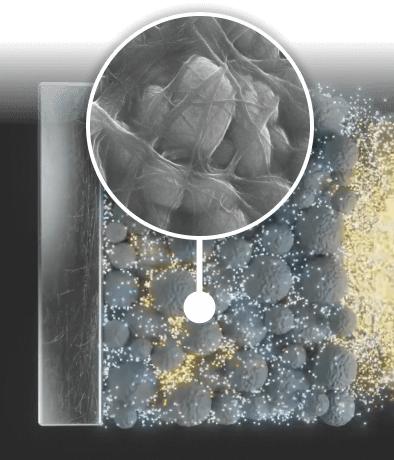
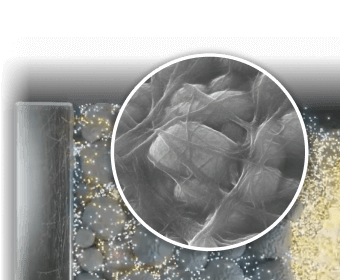
Any material breaks under stress, including battery materials, which now face substantial pressure from the emerging electric vehicle industry’s demands for longer lifetimes, lower weight, and cost efficiency. In physics terms, batteries now need to store more energy in a shorter period, leading to rapid material degradation and breakage.
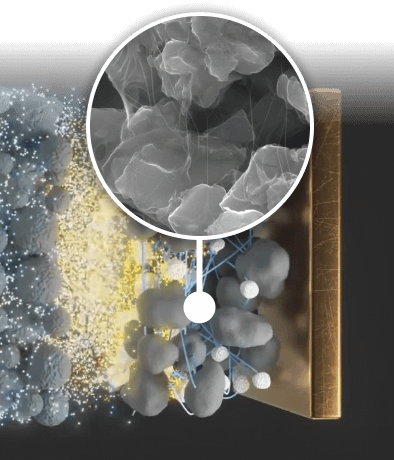
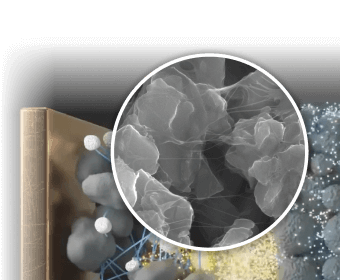
Single wall carbon nanotubes—one of nature’s strongest materials—offer a solution to this problem. They create a 3D network that reinforces battery electrodes, providing enhanced conductivity and flexibility, which suppresses degradation and extends battery life.
To put it simply, if we think of an electrode as a bookshelf and lithium ions as books, our goal is to maximize the bookshelf’s capacity while ensuring it remains stable as books are added and removed during charge/discharge cycles. Graphene nanotubes act like reinforcement bars for the bookshelf’s framework. Not only do they enhance the structure’s stability but they also allow us to make the bookshelf thinner while maintaining its strength, thereby creating more space for books.
Whether using silicon and graphite at the anode or LFP and NCM at the cathode, or even in next-generation lithium-sulfur or solid-state batteries, the principle remains the same: excessive energy causes material breakage. Graphene nanotubes prevent this, making them a crucial component in advanced battery technology.
FOR CONDUCTIVITY AND REINFORCEMENT OF ELECTRODE
Single wall carbon nanotubes, also known as graphene nanotubes, due to their highly distinctive intrinsic properties, demonstrate the unique ability to form robust long-distance electrical networks connecting particles of active battery material.
A single wall carbon nanotube can be imagined as a one-atom-thick sheet of graphene rolled into a tube with a diameter of about 1.6 (± 0.4) nanometers and a length of around 5 microns. An extremely high aspect length-to-diameter ratio of more than 3,000, and a low amount of structural defects due to the graphene-like nature, result in the high length, flexibility, unmatched conductivity, and strength of graphene nanotubes and the bundles they form.
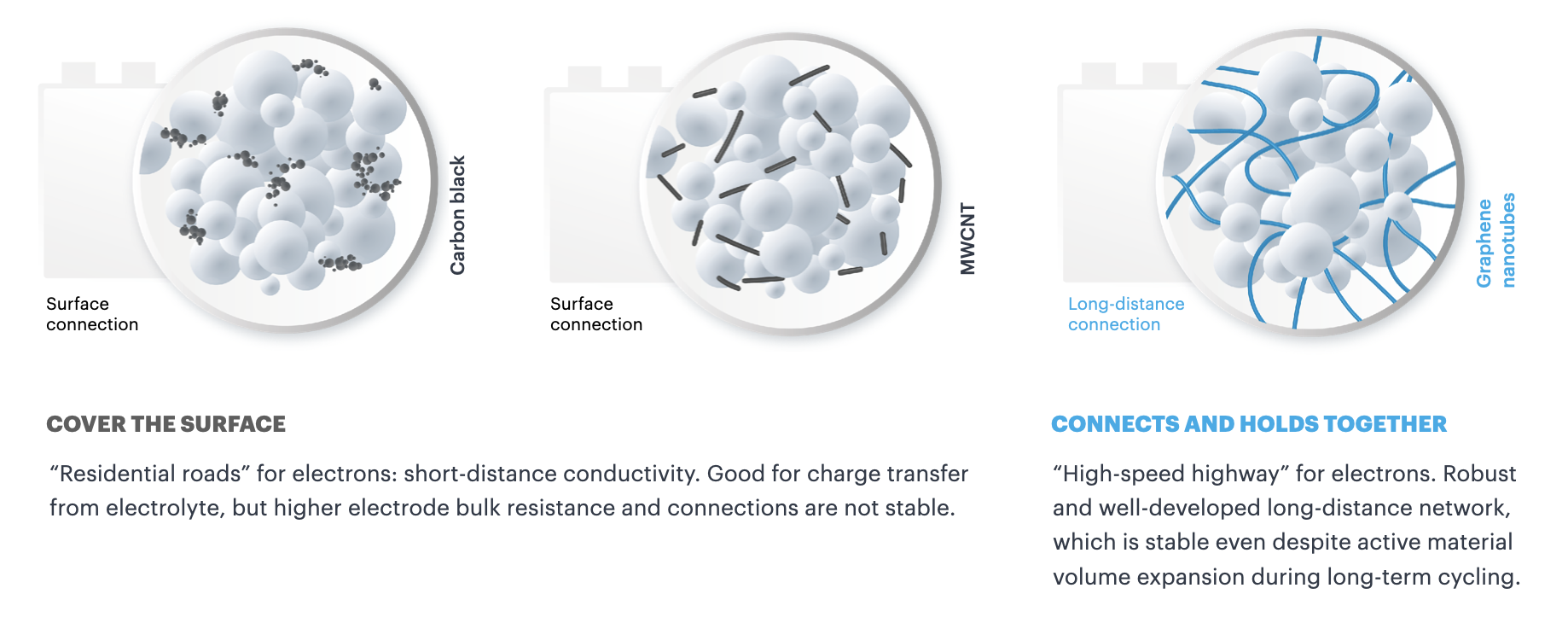
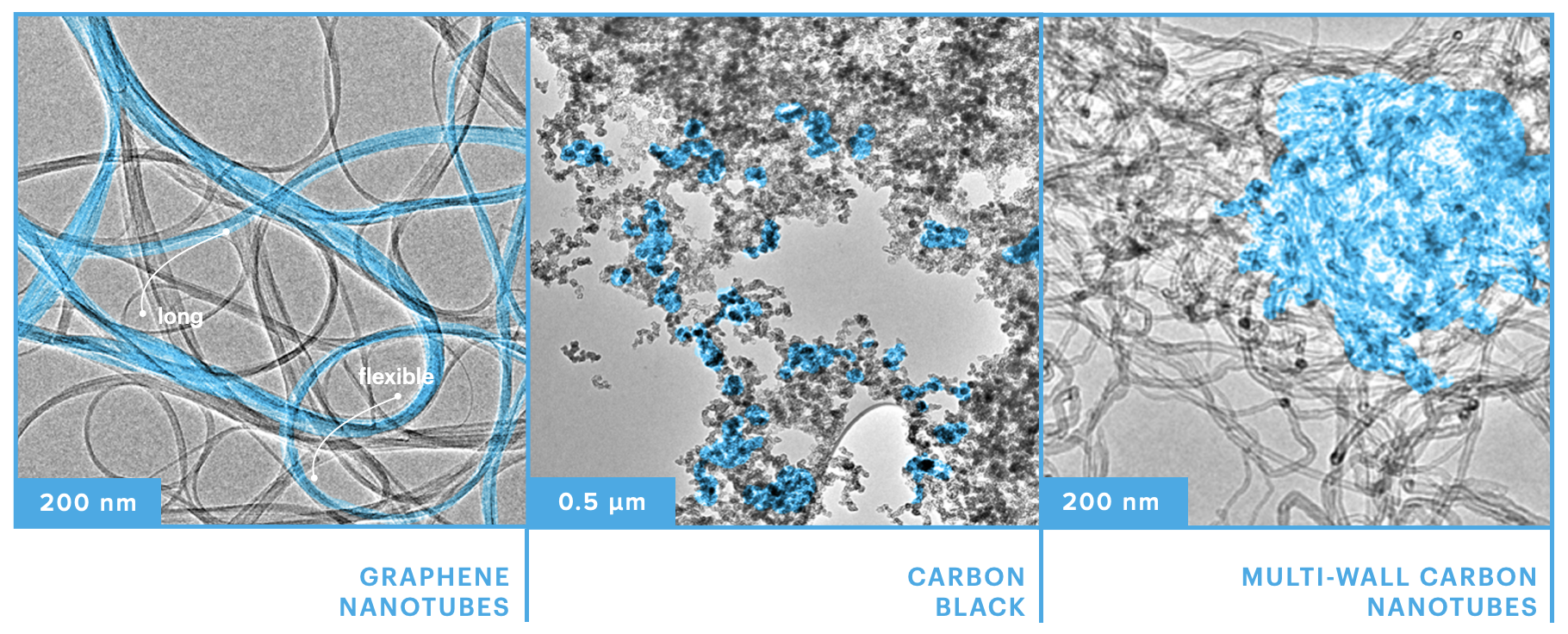
These intrinsic characteristics fundamentally differentiate single wall carbon nanotubes from other carbon-based materials for batteries, such as multi-wall carbon nanotubes or carbon black. Bundles of graphene nanotubes are able to create conductive, lоng, flexible bridges between electrode particles in a manner that's totally unique compared to other materials.
The ability to connect electrode particles at long distances allows graphene nanotubes to outperform alternative materials in many essential applications.


Contact us to discuss your project specifications or to request a sample

The pitch-derived soft carbon and SWCNTs provided an excellent conductivity, and the porous structure of the composite accommodated the stress produced by the Si expansion.

High thickness and specific capacity leads to areal capacities of up to 45 and 30 mAh cm−2 for anodes and cathodes, respectively. Combining optimized composite anodes and cathodes yields full cells with state-of-the-art areal capacities (29 mAh cm−2) and specific/volumetric energies (480 Wh kg−1 and 1,600 Wh l−1).

The all‐nanomat full cell shows exceptional improvement in battery energy density – 479 Wh/kg battery, and Si-anode capacity – 1166 mAh/g.

The use of SWCNT conductive additive enables graphite-free SiO electrodes with 74% higher volumetric energy and superior full-cell cycling compared to graphite electrodes.

Areal capacities greater than 10 mAh/cm2 and volumetric capacities greater than 1400 mAh/cm3 can be achieved.

Replacing Denka black with SWCNT allows to reduce the carbon content to 0.2 wt% to further increase the energy density, and 2 wt% of PVDF was shown to benefit the cycling stability due to the mitigated PVDF-induced side reactions from its direct contact with NCA particles.

