Construction elements
Graphene nanotubes for FRP structures: anti-static properties with maintained mechanical performance
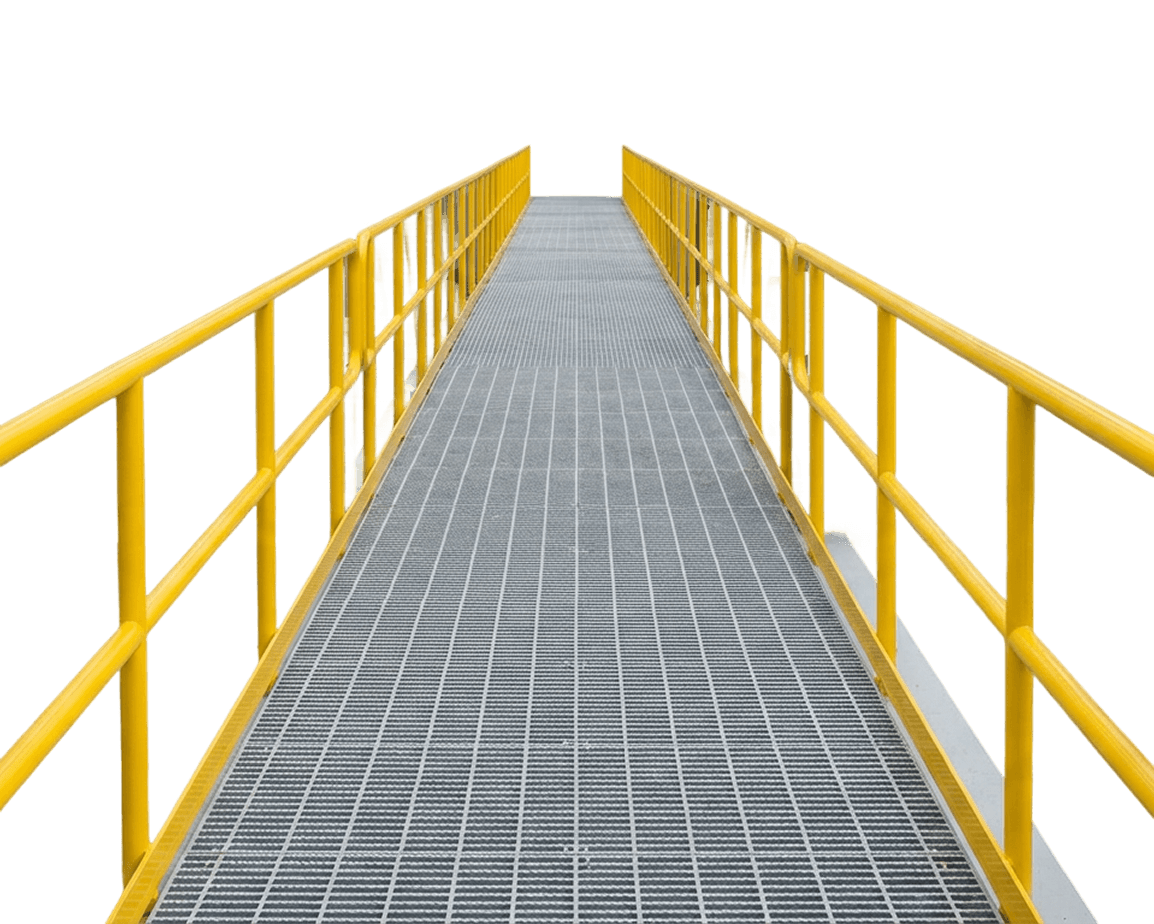
Graphene nanotubes provide pultruded and compression-molded FRP cable trays and gratings with permanent, humidity-independent antistatic performance throughout their service life. Uniform conductivity eliminates insulative spots, making these composites suitable for ATEX/IECEx zones and enhancing overall operational safety.
Effective at very low loadings, graphene nanotubes preserve chemical resistance, durability, and color flexibility. Supplied in ready-to-use forms, they enable clean, dust-free processing and are fully compatible with standard manufacturing equipment and technologies.
Contact us to discuss your project specifications or to request a TUBALL™ product sample
Main properties
Stable surface resistivity
10⁶–10⁹ Ω/sq
Maintained mechanical properties

Maintained color options


Graphene nanotubes for thermoset composites

What can conductive FRP replace steel?
Anti-static fiber-reinforced polymer products are high-performance alternatives to steel for corrosive, demanding, and high-safety environments. Unlike steel, FRP does not corrode, reducing maintenance and extending service life in chemical and industrial applications. Pultruded FRP offers high strength and stiffness for longer spans and reliable load-bearing performance, while compression-molded FRP provides excellent corrosion resistance, design flexibility, and slip-resistant surfaces.

Graphene nanotubes offer better performance
TUBALL™ graphene nanotubes deliver permanent, humidity-independent antistatic performance at very low loadings, preserving mechanical properties and design flexibility. Compared with conventional antistatic additives, graphene nanotubes offer high-performance advantages over:
- migratory liquid additives, which rely on humidity, tend to leach over time, and are unsuitable for long service life or ATEX/IECEx applications;
- carbon black, which provides conductivity only at high loadings, limits color to black, increases weight, and can negatively affect mechanical properties and surface quality;
- metal fillers and fibers, which add conductivity but significantly increase weight, may corrode in aggressive environments, and reduce electrical insulation;
- Diagram
- Table
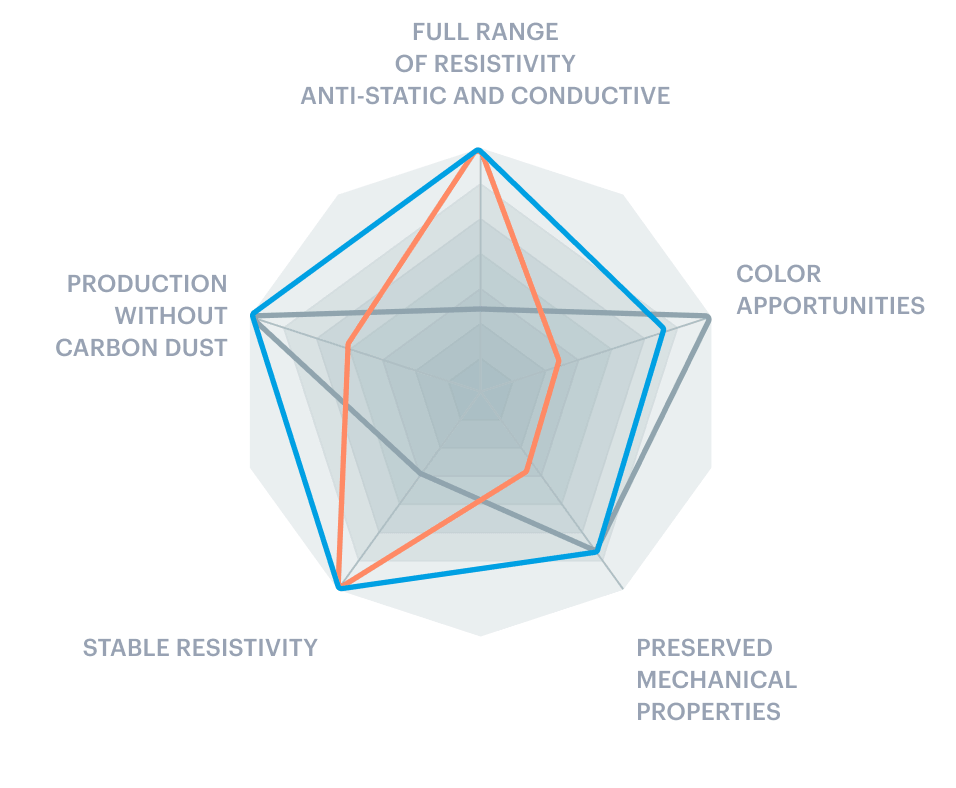
- TUBALL™ nanotubes
- Carbon black
- Liquid anti-static agents
* This diagram provides average trends compared with other additives, based on OCSiAl data. Product performance may vary depending on product type and formulation.

Conductivity with variety of colors
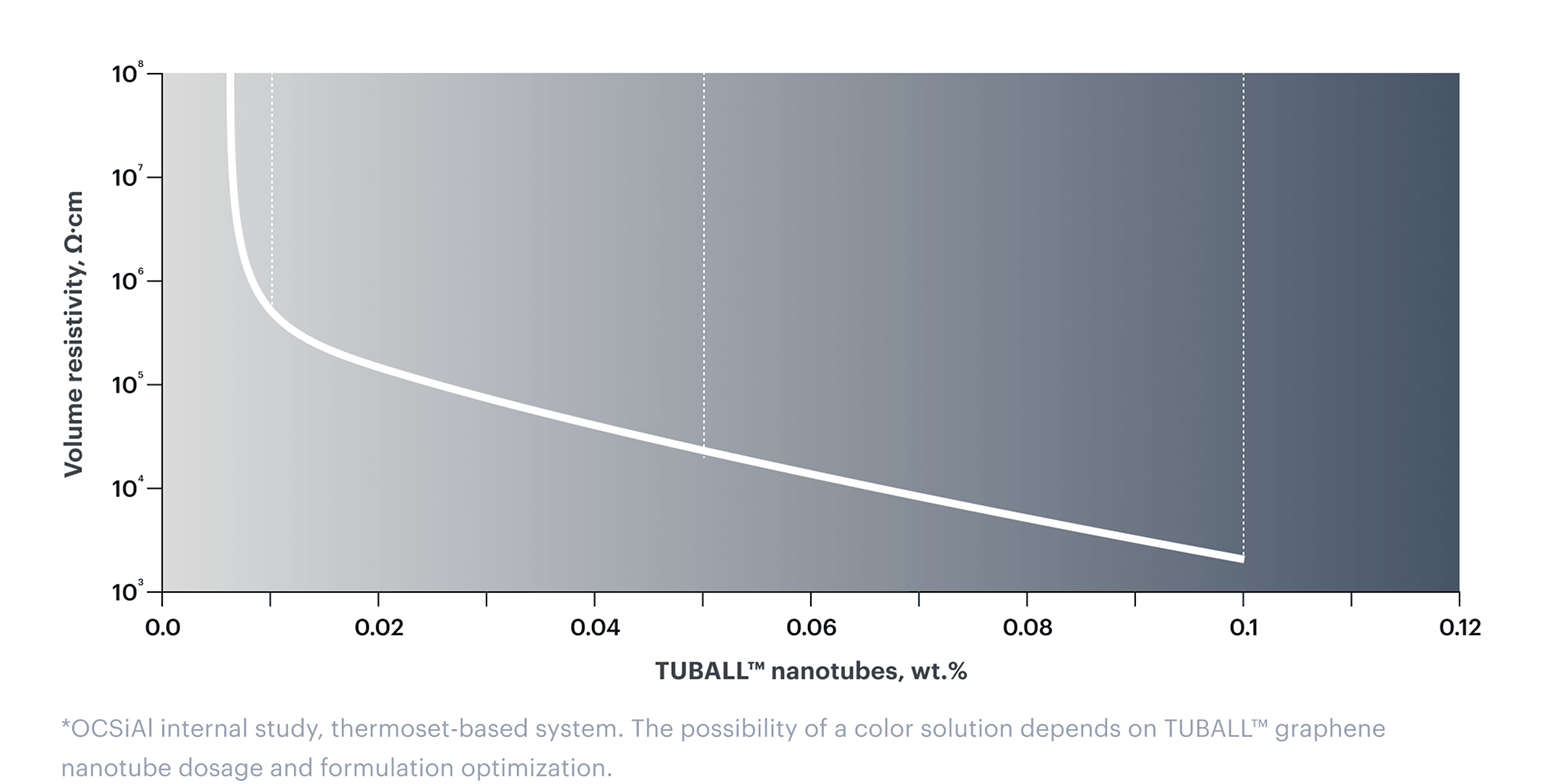
Starting at just 0.01 wt.%, TUBALL™ graphene nanotubes create a stable, three-dimensional conductive network within fiber-reinforced polymers, delivering precise control over electrical resistivity from antistatic to fully conductive. Its ultralow loading preserves the intrinsic properties of the composite and, unlike conventional additives, allows manufacturers to produce durable, high-performance thermoset parts in a wide range of colors.
Contactez-nous pour discuter des spécifications de votre projet ou demander un échantillon de TUBALL™ MATRIX

Additional benefits
Limited impact on viscosity and thixotropy

Production without carbon dust

Increased cost efficiency


Ready-to-apply solutions
TUBALL™ MATRIX are concentrates based on polymer-carriers and pre-dispersed TUBALL™ graphene nanotubes. They are specifically designed for polyester, epoxy, and vinyl-ester composites and coatings. The concentrates can be added during the compounding stage and don’t affect standard processing or equipment.
Contactez-nous pour obtenir les recommandations de mise en œuvre des produits et une documentation technique complémentaire

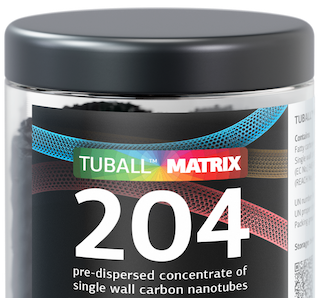
TUBALL™ MATRIX 204
Agent conducteur d’électricité universel pour composés acryliques, mélaminés, de vinylester et polyester, n'affectant pas négativement la couleur et les propriétés mécaniques du matériau.
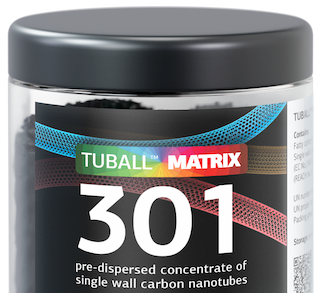
TUBALL™ MATRIX 301
Additif conducteur d’électricité pour composites epoxy, revêtements et composés de polyuréthane sans solvant, n'affectant pas négativement la couleur et les propriétés mécaniques du matériau
Related video
TUBALL nanotubes for thermoset composites: conductivity and reinforcement
Media on graphene nanotubes in composites
 Publié:
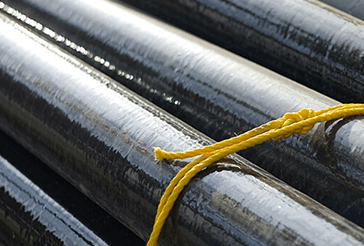
Enhancing safety of composite pipes for oil & gas, chemical, and production sites
https://www.jeccomposites.com/news/spotted-by-jec/enhancing-safety-of-composite-pipes-for-oil-gas-chemical-and-production-sites/?news_type=announcement,business,product-technology&end_use_application=
Scientific validation

Composites
Interlocking Matrix and Filler for Enhanced Individualization and Reinforcement in Polymer–Single-Walled Carbon Nanotube Composites
SWCNT-enhanced polymer, in which every monomer is decorated with a U-shaped fragment, exhibits significantly increased mechanical properties when compared to the matrix polymer.
Publié:

Composites
Preparation and functional study of epoxy composites reinforced with ultra-low content single-walled carbon nanotubes
It was shown that the electrical conductivity of SWCNT/epoxy composites increased by 7 orders of magnitude over that of epoxy resin when the content of SWCNTs was 0.005 wt%. The impact strength, tensile strength, and elastic modulus of the materials were increased by 47.9%, 58.9%, and 19.0%, respectively.
Publié:

Composites
The Effect of Single-Walled Carbon Nanotube (SWCNT) Concentration on the Mechanical and Rheological Behavior of Epoxy Matrix
0.025 wt.% SWCNTs improved the Mode I fracture toughness, UTS, and elastic modulus of epoxy by about 182, 15, and 11%, respectively.
Publié:

Composites
On the effect of electric field application during the curing process on the electrical conductivity of single-walled carbon nanotubes–epoxy composites
Applying an electric field during the curing of SWCNT/epoxy nanocomposites promotes the orientation and assembly of nanotubes into a more efficient conductive network, reducing electrical resistivity by up to one order of magnitude even at ultra-low loadings (0.01 wt%).
Publié:
Composites
Conductive carbon nanotube-reinforced polymer composites and their characterization
Loading SWCNTs into carbon black/polymer composites lowers the volume resistivity of such composites. The application of a small quantity of SWCNTs in carbon black/polymer composites allows reducing the carbon black content and improving the rheological and processing properties.
Publié: