Gelcoats
Graphene nanotubes for gelcoats: electrical conductivity, preserved color, simple handling
Graphene nanotubes enhance gelcoats by delivering reliable electrical conductivity without compromising color, gloss, or surface smoothness. Such gelcoats effectively dissipate electrostatic charge during production and demolding, improving worker safety, protecting sensitive equipment and manufactured parts, and reducing surface defects.
Working at ultralow concentrations and via standard processing, nanotubes offer greater formulation flexibility; a cleaner, dust-free manufacturing process; improved overall cost efficiency; and compatibility with common application methods, including spray technology.

Contact us to discuss your project specifications or to request a TUBALL™ product sample
Main properties
Full range
of electrical resistivity
10⁴–10¹¹ Ω/sq
Easy
handling
Customizable
coloration

Colored conductive gelcoats with graphene nanotubes

Why should gelcoats be conductive?
Conductive gelcoats are used on final composite or plastic products to provide surface protection and superior appearance, particularly for electronic equipment in ATEX-sensitive areas, where they safely dissipate electrostatic charge and reduce ESD risks.
Tooling gelcoats (mold gelcoats) are used to manufacture molds for fiberglass, carbon fiber, and hybrid composite parts. They are applied in molds in the aerospace, automotive, marine, wind energy, and construction industries, creating durable, high-quality surfaces for repeated part production. Traditional nonconductive tooling gelcoats can generate electrostatic charges during demolding due to the triboelectric effect, causing surface damage, electric shocks, or explosion risks. Conductive gelcoats eliminate these issues by:
- reducing static buildup
- easing demolding
- improving safety for workers
- shortening production cycles.

Graphene nanotubes offer overall high performance
TUBALL™ graphene nanotubes bring reliable electrical conductivity to gelcoats, setting a new standard beyond carbon black and ammonium salts. These ultrastrong, flexible, and highly conductive nanotubes work at ultralow loadings—dozens of times lower than conventional additives—to deliver exceptional performance without compromise. The result is a permanent antistatic surface in a wide range of colors, preserved mechanical properties, and a clean, dust-free production process, unlocking superior quality, safety, and design freedom.
- Diagram
- Table
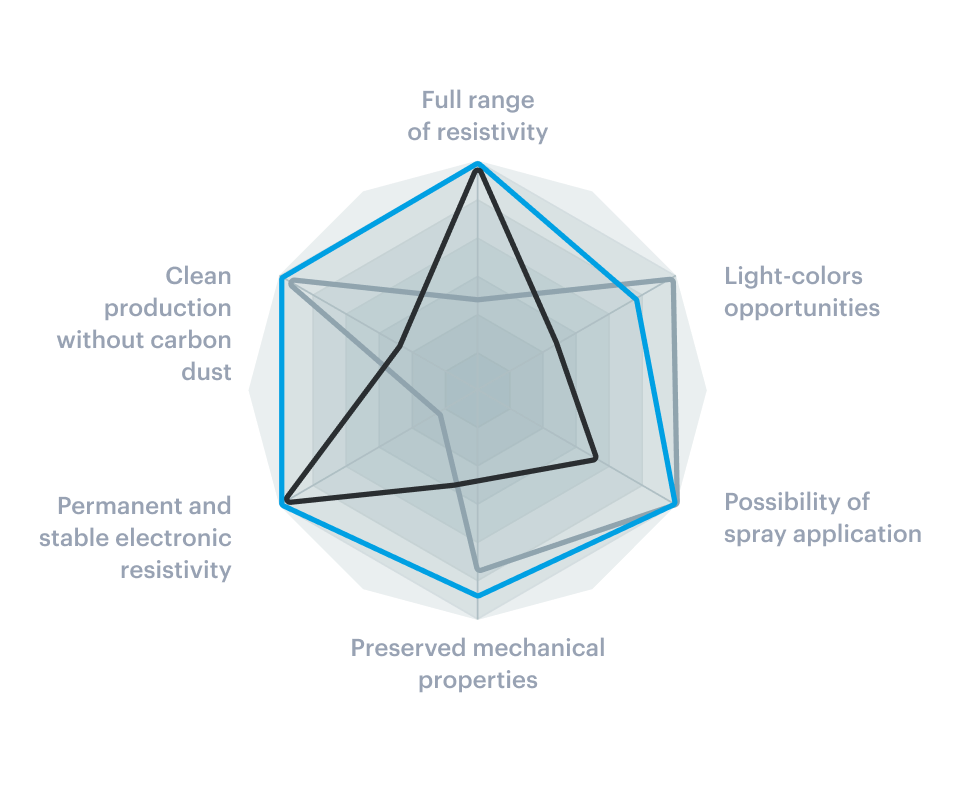
- TUBALL™ graphene nanotubes
- Carbon black
- Ammonium salts
* This diagram provides average trends compared with other additives, based on OCSiAl data. Product performance may vary depending on product type and formulation.

Permanent conductivity
Starting from 0.01 wt.%, TUBALL™ graphene nanotubes form a stable conductive 3D network in polyester gelcoats and moldcoats, enabling precise control of surface electrical resistivity from 10⁴ to 10¹¹ Ω/sq. This ensures effective dissipation of electrostatic charges, protecting molds, finished parts, equipment, and personnel from ESD-related damage and safety hazards throughout production and demolding.


Variety of color
Thanks to their ultralow working loading, TUBALL™ nanotubes enable the production of light-colored and colorful gelcoats with minimal graying effect while delivering reliable electrical conductivity and preserving a smooth surface.

Contactez-nous pour discuter des spécifications de votre projet ou demander un échantillon de TUBALL™ MATRIX

Additional benefits
Limited impact on viscosity and thixotropy

Flexibility in formulation

More efficient logistics


Easy-to-apply with standard equipment
TUBALL™ MATRIX are concentrates with high-quality dispersed TUBALL™ graphene nanotubes designed for elastomers. They provide compatibility with standard processes and equipment. The concentrates can be added during the mixing or compounding stage and don’t affect the manufacturing process.
Contactez-nous pour obtenir les recommandations de mise en œuvre des produits et une documentation technique complémentaire
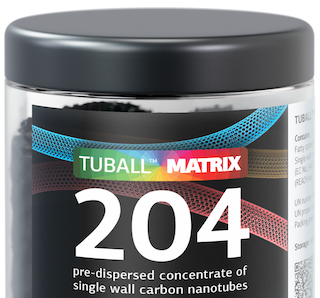
TUBALL™ MATRIX 204
Agent conducteur d’électricité universel pour composés acryliques, mélaminés, de vinylester et polyester, n'affectant pas négativement la couleur et les propriétés mécaniques du matériau.
Related video
TUBALL™ MATRIX - Processing guidelines
Media on graphene nanotubes in gelcoats
 Publié:
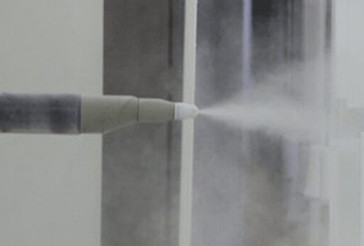
Expanding the freedom of design: Powder coating on FRP thanks to conductive gelcoats with graphene nanotubes
https://www.jeccomposites.com/news/spotted-by-jec/expanding-the-freedom-of-design-powder-coating-on-frp-thanks-to-conductive-gelcoats-with-graphene-nanotubes/ Publié:
OCSiAl, BÜFA Develop TUBALL Nanotubes
https://www.coatingsworld.com/breaking-news/ocsial-bufa-develop-tuball-nanotubes/