Electrically conductive additive for thermoplastics with retained mechanical performance and required processability
TUBALL™ graphene nanotubes (also known as single wall carbon nanotubes) demonstrate promising results as conductive additives for plastics.
Graphene nanotubes create a dense conductive network inside thermoplastic compounds that guarantees stable electrically conductive performance with no adverse effects on the mechanical and rheological properties of plastics.
OCSiAl markets nanotube-based concentrate for wide range of thermoplastics: glass fiber filled polyamide, polyamide, glass fiber filled PPS, PVC-plastisol, TPU, polycarbonate, ABS, PC-ABS polypropylene. Other conductive additives with nanotubes for polyethylene, polystyrene and others are undergoing validation and are referred to as beta products.
Conductive additives: traditional vs TUBALL™
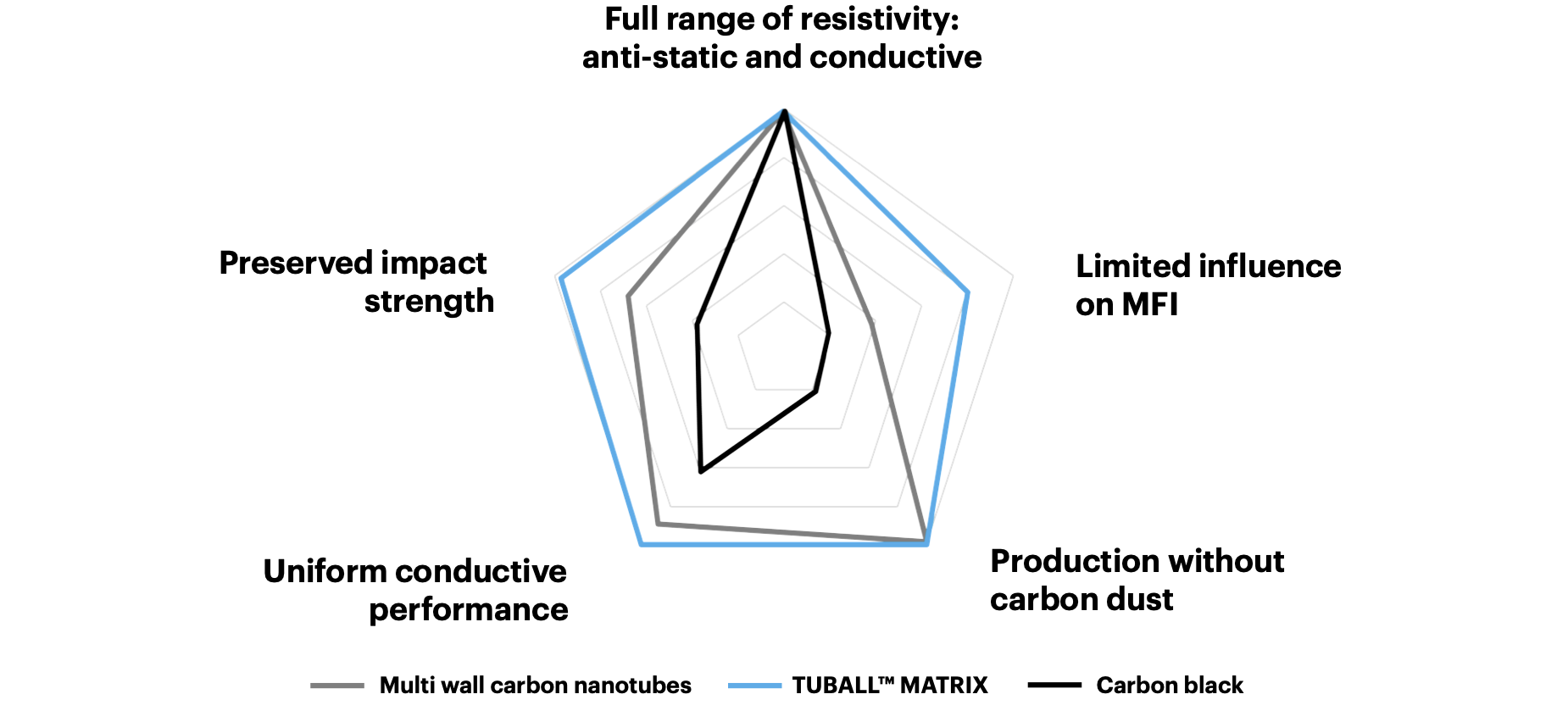
Note. This diagram provides average trends compared with other additives based on OCSiAl data. Product performance may vary depending on product type and formulation.
TUBALL™ MATRIX multiple benefits
- Enables a new combination of properties in comparison to standard conductive additives
- Surface resistivity of 103–109 Ω/sq*
- Volume resistivity of 103–109 Ω∙cm*
- Maintains good balance of mechanical properties
- Stable performance reducing the number of out-of-spec parts
- Good processability
- Permanent homogeneous resistivity without “hot spots”
- High surface quality
- Allows production of conductive parts that retain colors
- Freedom to incorporate other functional ingredients
* Values can vary depending on the formulation, processing and products. The values shown are given as the typical reference.
TUBALL™ graphene nanotube solutions for plastics
To adapt nanotubes to a standard manufacturing process without purchasing specific equipment or changing the original formulation, OCSiAl has developed TUBALL™ MATRIX line of concentrates.
| Produit | Dispersant | Forme* | Systèmes cibles | |||||||||||||||
|---|---|---|---|---|---|---|---|---|---|---|---|---|---|---|---|---|---|---|
| Polyéthylène | PE Rotomoulage | Polypropylène | PVC | HIPS thermoformé | TPU | PPS chargé verre | ABS | PC | PA chargé verre | PC-ABS | PA | PBT chargé verre | Revêtements en poudre | PET | ||||
| TUBALL™ MATRIX concentrates (Pellets or black flakes paste @ standard dosage 0.3%–3.0%) | ||||||||||||||||||
 | Ethylene copolymer | PWD | ||||||||||||||||
 | Polyol ester | PLT | ||||||||||||||||
 | Polymer + ammonium salt of polyolefins-based derivative (CAS-No. 398475-96-2) | PST | ||||||||||||||||
 | Epoxidized fatty acid glyceride | PST** | ||||||||||||||||
 | Polyethylene wax | PLT | ||||||||||||||||
 | Reaction mass of fatty acids, montan-wax, ethylene esters | PLT | ||||||||||||||||
| TUBALL™ suspensions COAT_E (Black liquid @ standard dosage 1.5%–6.4%) | ||||||||||||||||||
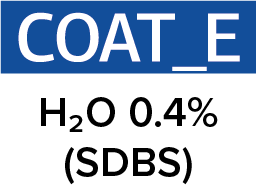 | Water + anionic surfactant (sodium dodecylbenzenesulfonate, CAS-No. 25155-30-0) | SPSN | ||||||||||||||||
| * PLT – granulés, PST – pâte, SPSN – suspension | ||||||||||||||||||
| ** Spécifique pour PVC plastisol | ||||||||||||||||||